How Singapore restaurants take bookings: Chope leads at about 55%
About 23% of Singapore sit-down restaurants take bookings through a platform. Chope reaches about 55% of those online bookers, followed by inline, Oddle and SevenRooms.
Key findings
- About 23% of Singapore sit-down restaurants take bookings through a platform.
- Chope reaches about 55% of restaurants found on a booking platform.
- inline reaches about 15%, while Oddle and SevenRooms each reach about 14%.
- About 33% of restaurants found on a booking platform use several providers.
About 23% of Singapore sit-down restaurants take bookings through a platform. Chope is the clear leader, reaching about 55% of restaurants found on a booking platform.
Behind it sits a close second tier. inline reaches about 15% of online bookers, while Oddle and SevenRooms each reach about 14%. That makes Singapore a market with one large marketplace and several meaningful alternatives spanning marketplaces and restaurant-owned booking tools.
About 23% book through a platform
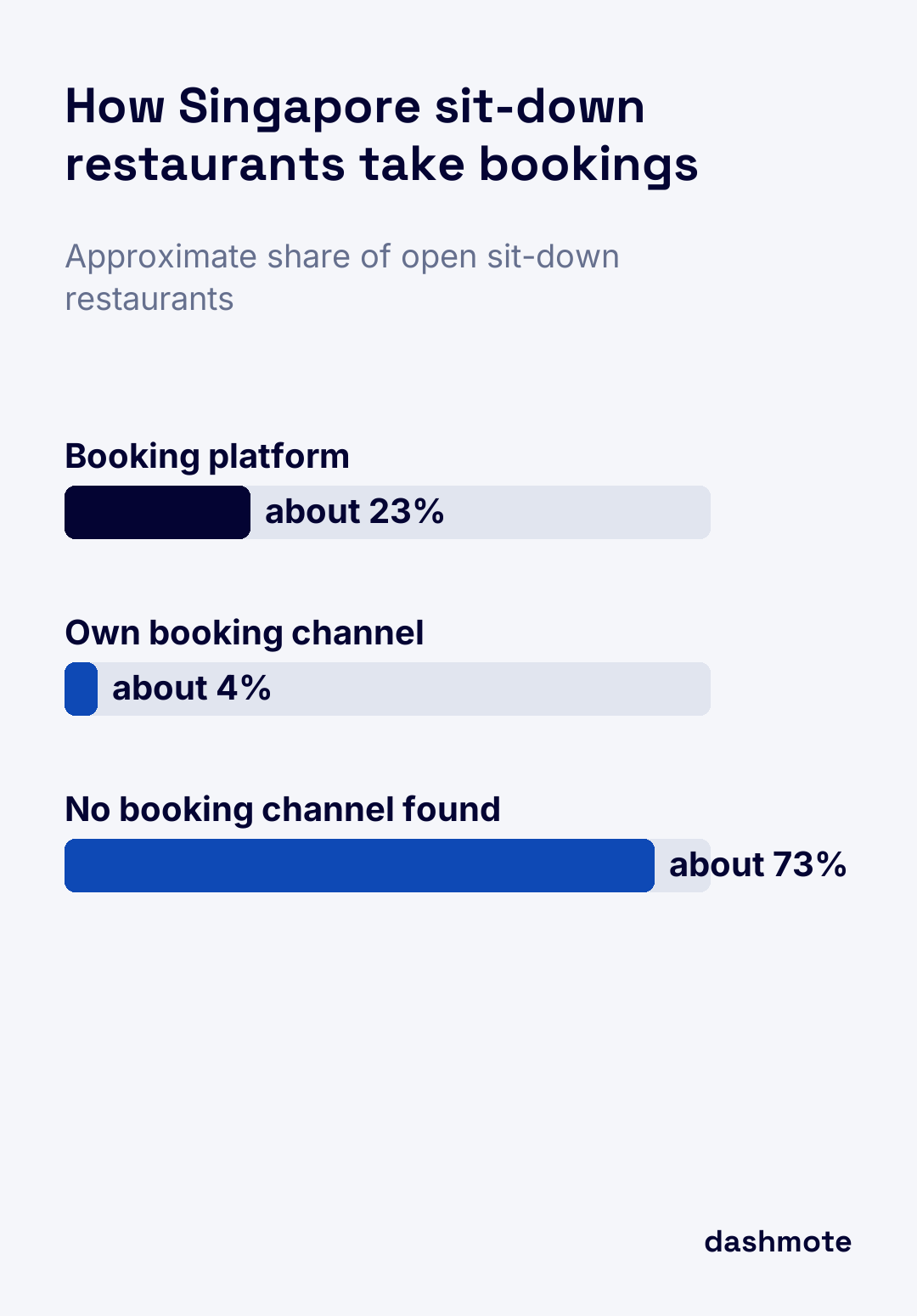
About 23% of Singapore sit-down restaurants take bookings through a platform. About 4% use an own booking channel, such as a direct form or message, while no booking channel was found for about 73%.
For restaurant technology providers, the large share without a visible booking channel is the commercial opening. Some venues will prefer walk-ins or phone calls. Others are potential first-time buyers of online reservations, guest management or direct-booking tools.
The broader restaurant technology data hub connects this view to the restaurant reservation data category and the reservation platform market share overview.
Chope has a wide lead
Chope reaches about 55% of restaurants found on a booking platform. inline follows at about 15%, with Oddle and SevenRooms each at about 14%.
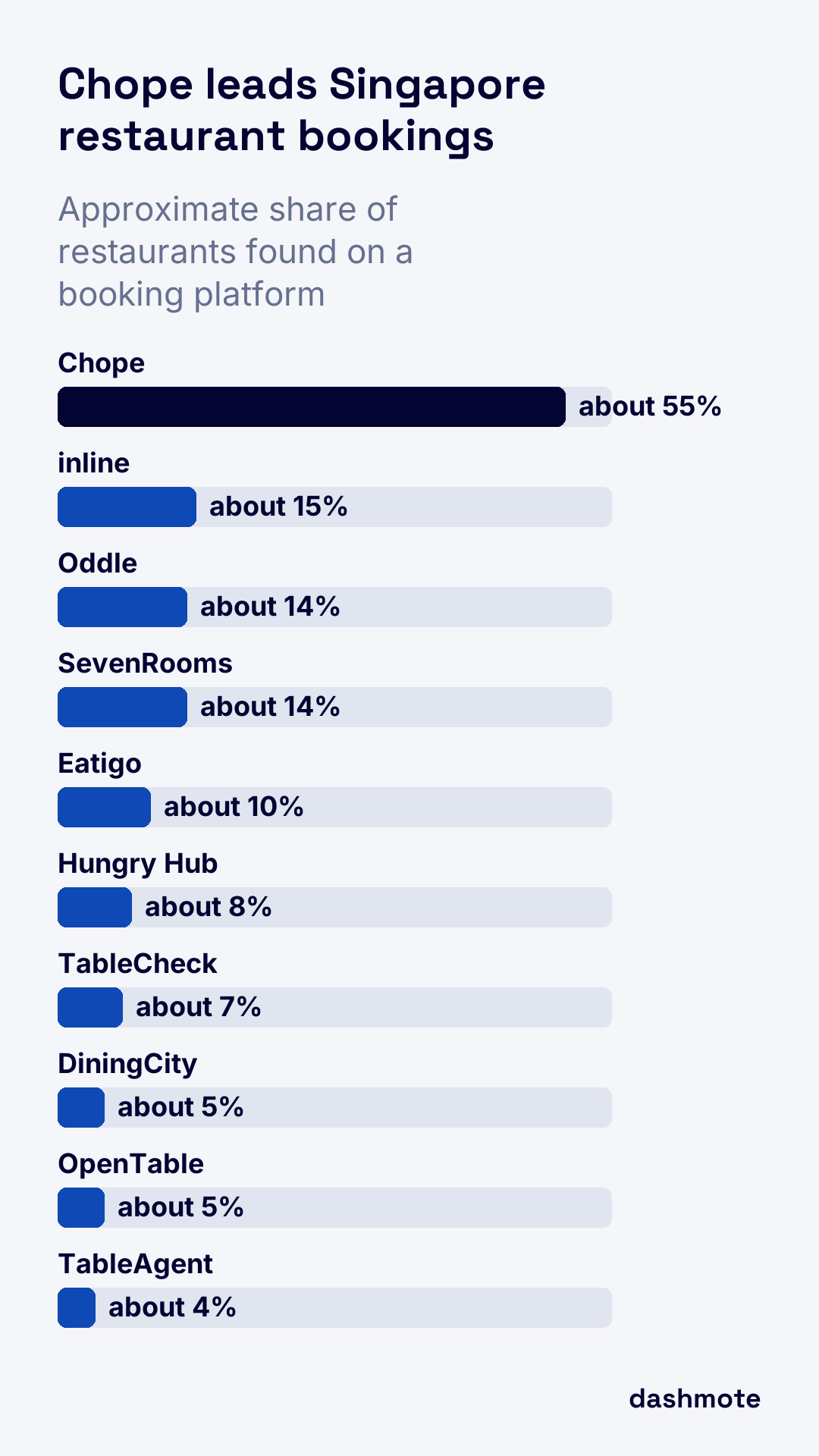
The next group remains meaningful. Eatigo reaches about 10%, Hungry Hub about 8% and TableCheck about 7%. DiningCity and OpenTable each reach about 5%, followed by TableAgent at about 4%.
The percentages overlap because a restaurant can use several providers. About 67% of platform bookers use one provider, while about 33% use several. For a platform sales team, the distinction matters: a restaurant with no provider is a new category sale, while a restaurant with several is an overlap account where distribution, guest ownership and fees shape the pitch.
Marketplaces and direct tools compete side by side
Singapore's booking market mixes guest-facing marketplaces with tools that keep the booking journey closer to the restaurant. Chope, Eatigo, Hungry Hub, DiningCity, OpenTable and TableAgent help diners discover and reserve. inline, Oddle, SevenRooms and TableCheck give restaurants their own branded booking path.
That mix creates three distinct account types:
- No platform booking found. These venues are the white space for first-time adoption.
- One provider. These restaurants already value online bookings but have a concentrated setup.
- Several providers. These venues are active comparison accounts and potential integration partners.
Singapore also shows why a shutdown or market exit can quickly reshape booking competition. Read who is winning restaurant bookings after Quandoo closed for the wider regional and European view.
What reservation teams should do
- Separate adoption from switching. A venue with no platform needs a different pitch from one already taking bookings online.
- Prioritise the competitive second tier. The group behind Chope is close enough that local segments and restaurant types can change the order.
- Track overlap at venue level. City share shows the market; venue overlap shows which restaurants are open to another provider.
More city reads: restaurant tech in Sydney, POS systems in New York, Amsterdam and Sydney and restaurant loyalty programs in New York, Amsterdam and Sydney.
Dashmote maps restaurant technology to the venue across 60+ countries. Book a demo to see the booking landscape for your target cities.