
Restaurant POS system data: which checkout system each venue runs
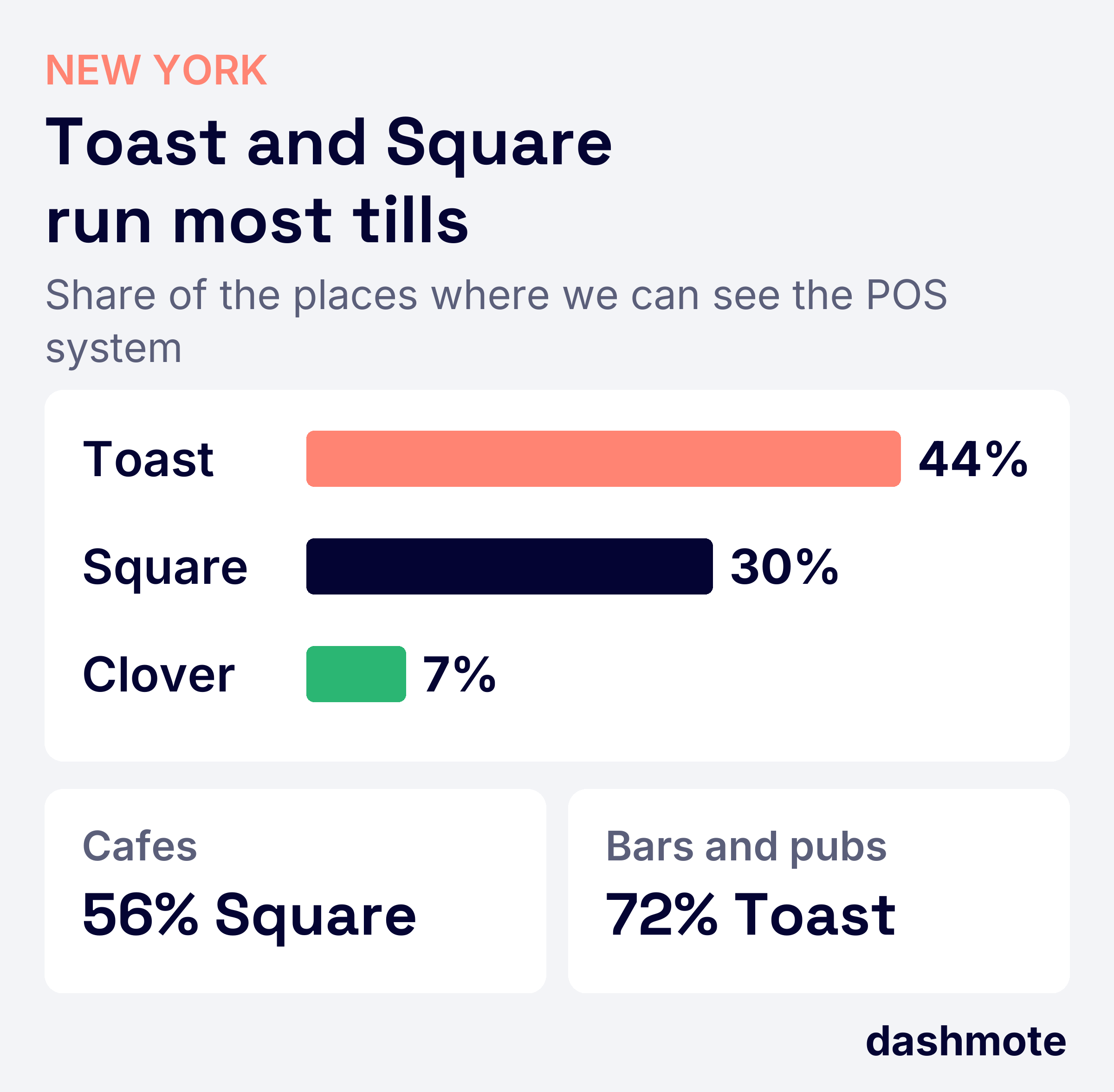
Restaurant POS system data records which point-of-sale system, the till and checkout software, each restaurant, cafe and bar runs. In New York we can see the system for 29% of all places, and of those, Toast runs 44% and Square 30%. In London, Amsterdam and Sydney we show what we found: the systems seen most often and the kinds of places that run them. POS and payments companies, ordering apps and food and drinks brands use it to know which partner, integration and pitch each venue needs.
The trusted intelligence layer for teams selling to Hospitality & Retail








The till decides what you can sell
This page is about the point-of-sale system, the till and checkout software. For posters, menus and fridges in the venue, see POS material detection.
The POS holds a venue's menu, its prices and often its loyalty programme. Ordering, promotions and payments increasingly run through it, so a brand that wants a product listed or priced in a promotion often needs the venue's system, or a partner of it.
Each venue record carries its POS system next to the outlet profile:
| Field | What it tells you | Example values |
|---|---|---|
| POS system | Every checkout system seen at the venue | Toast; Square |
| Systems seen | One, several or none visible | One, several, none found |
| Kind of place | The venue type and cuisine, from the outlet profile | Cafe; pizza restaurant; pub |
| Independent or chain | Whether the venue belongs to a multi-site brand | Independent; chain |
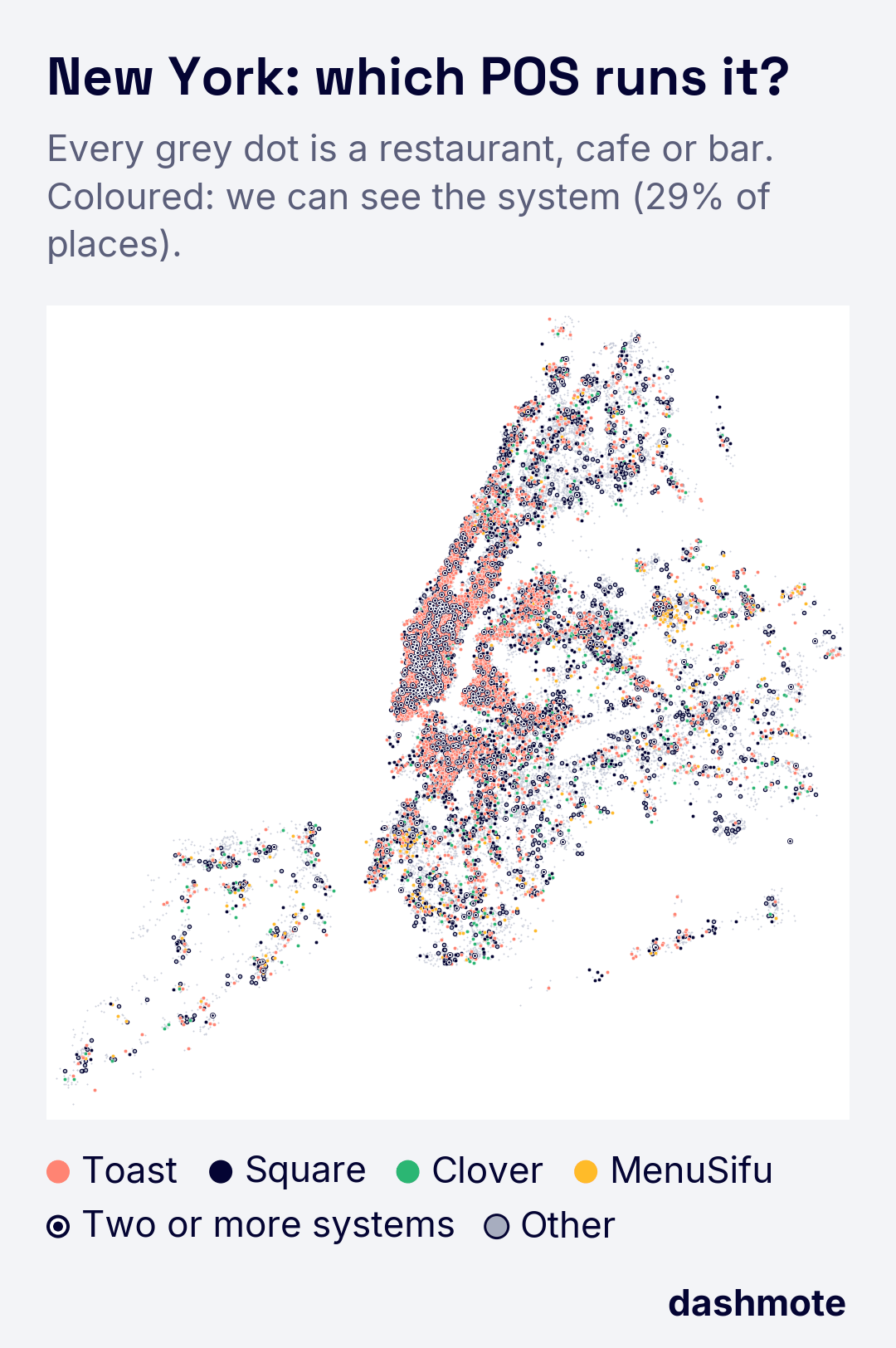
New York: two systems, and the menu picks one
Of the New York places where we can see the system, 72% run Toast or Square, and Toast leads. Which one depends on what the venue serves:
- Coffee is Square country. 56% of the cafes we can see run on Square.
- Bars are Toast country. 72% of the bars and pubs we can see run on Toast, and about half of the pizza and Italian places.
- Chinese restaurants run their own systems. 65% of the Chinese restaurants we can see use MenuSifu or Chowbus, systems built for Asian restaurants, with their own ordering and partners.
A brand that only talks to the two big names misses a whole segment of the city.
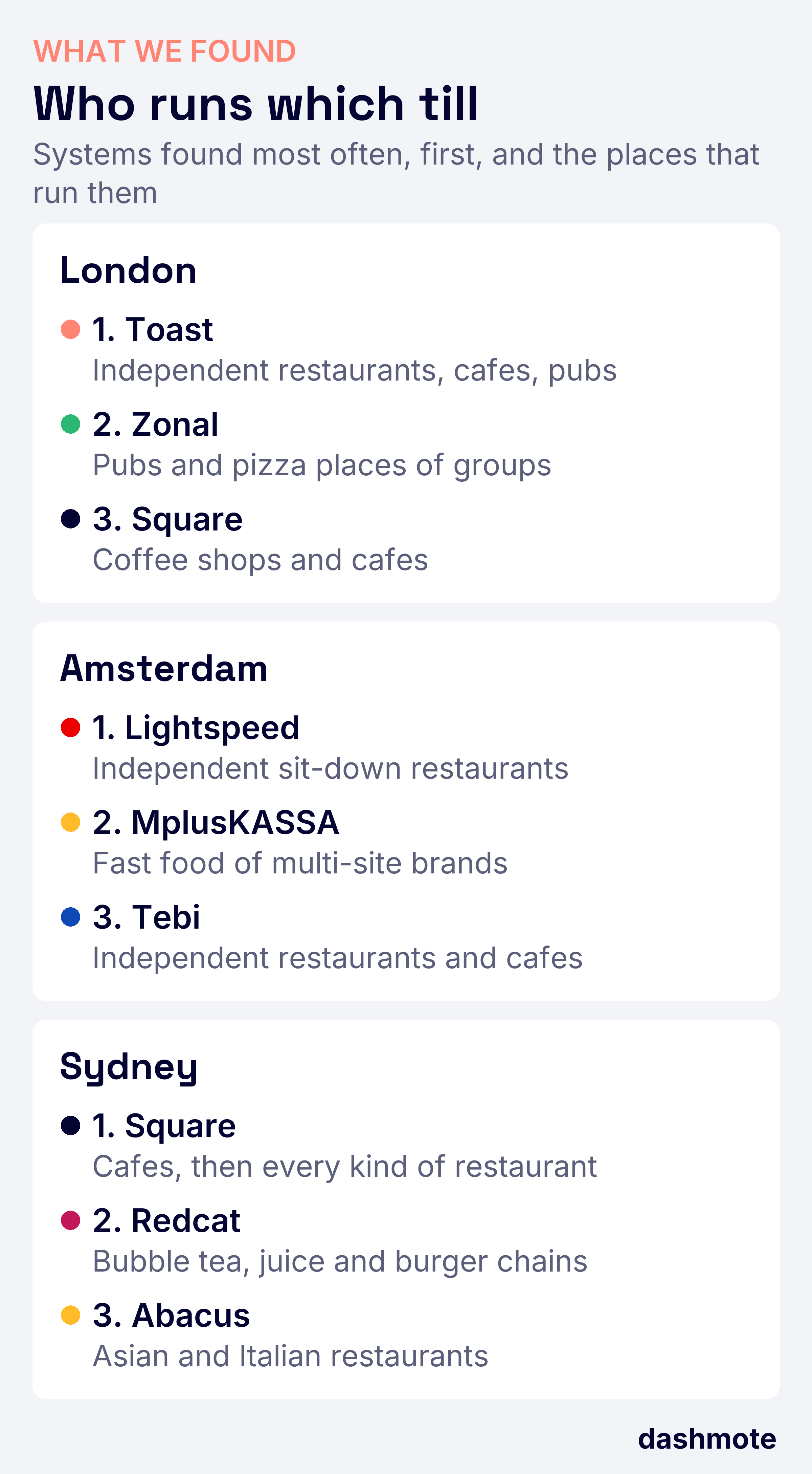
London, Amsterdam, Sydney: what we found
In these cities the till shows in public less often, so we report what we found rather than shares: the systems seen most often, first, and the kinds of places that run them. A venue where no system shows in public still runs one; we just cannot see it.
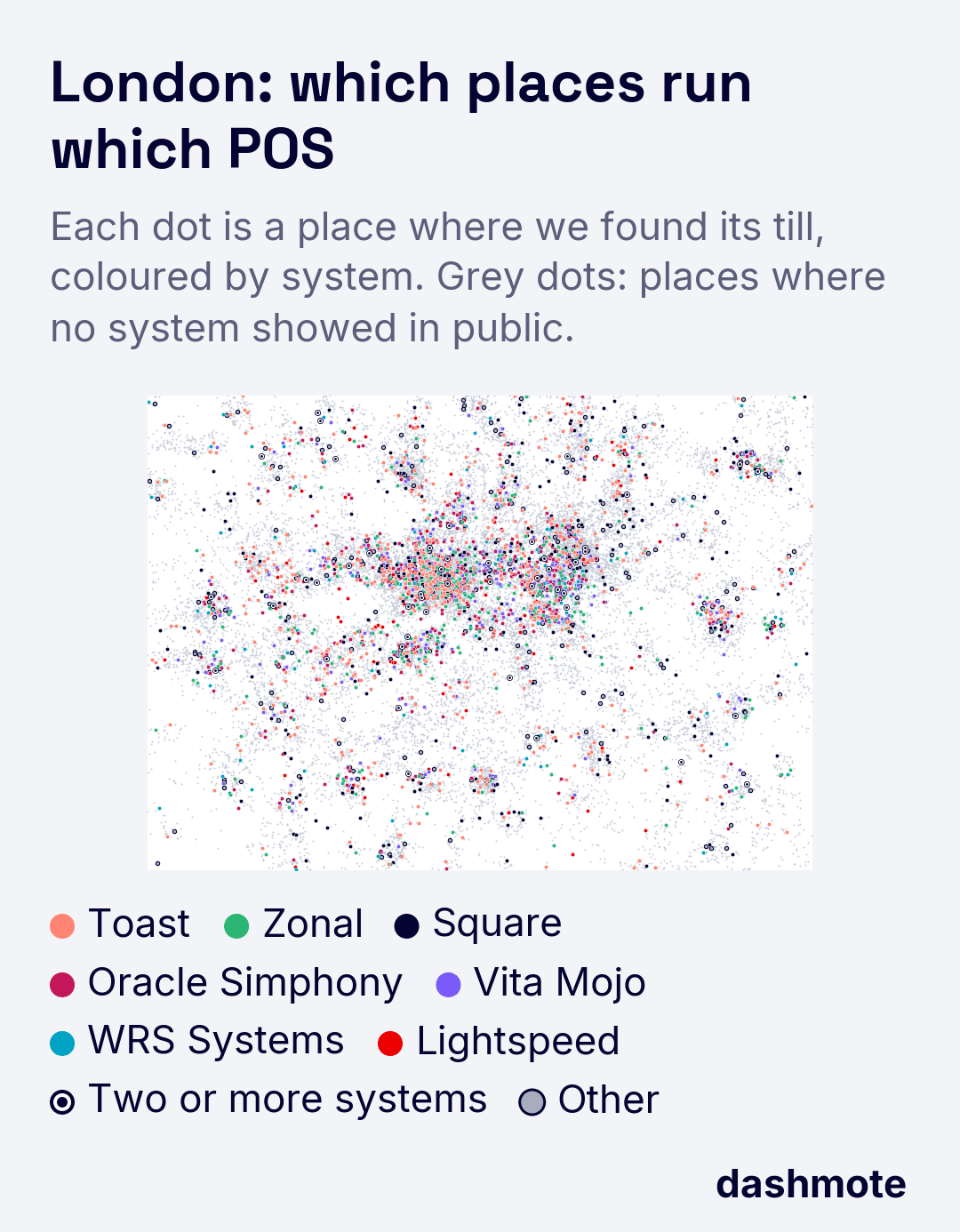
London: Toast first, then the pub groups' system
Toast is the system we see most often in London, at 20% of the places where a system shows, mostly at independent restaurants, cafes and pubs.
After Toast come:
- Zonal, at pubs and pizza restaurants, almost all of them part of pub and restaurant groups.
- Square, at coffee shops, cafes and brunch places, mostly independents.
- Oracle Simphony and WRS Systems, at sandwich and coffee chains.
- Vita Mojo, at sushi, Japanese, burger and coffee places.
- Lightspeed, at independent restaurants, pizza places and cafes.
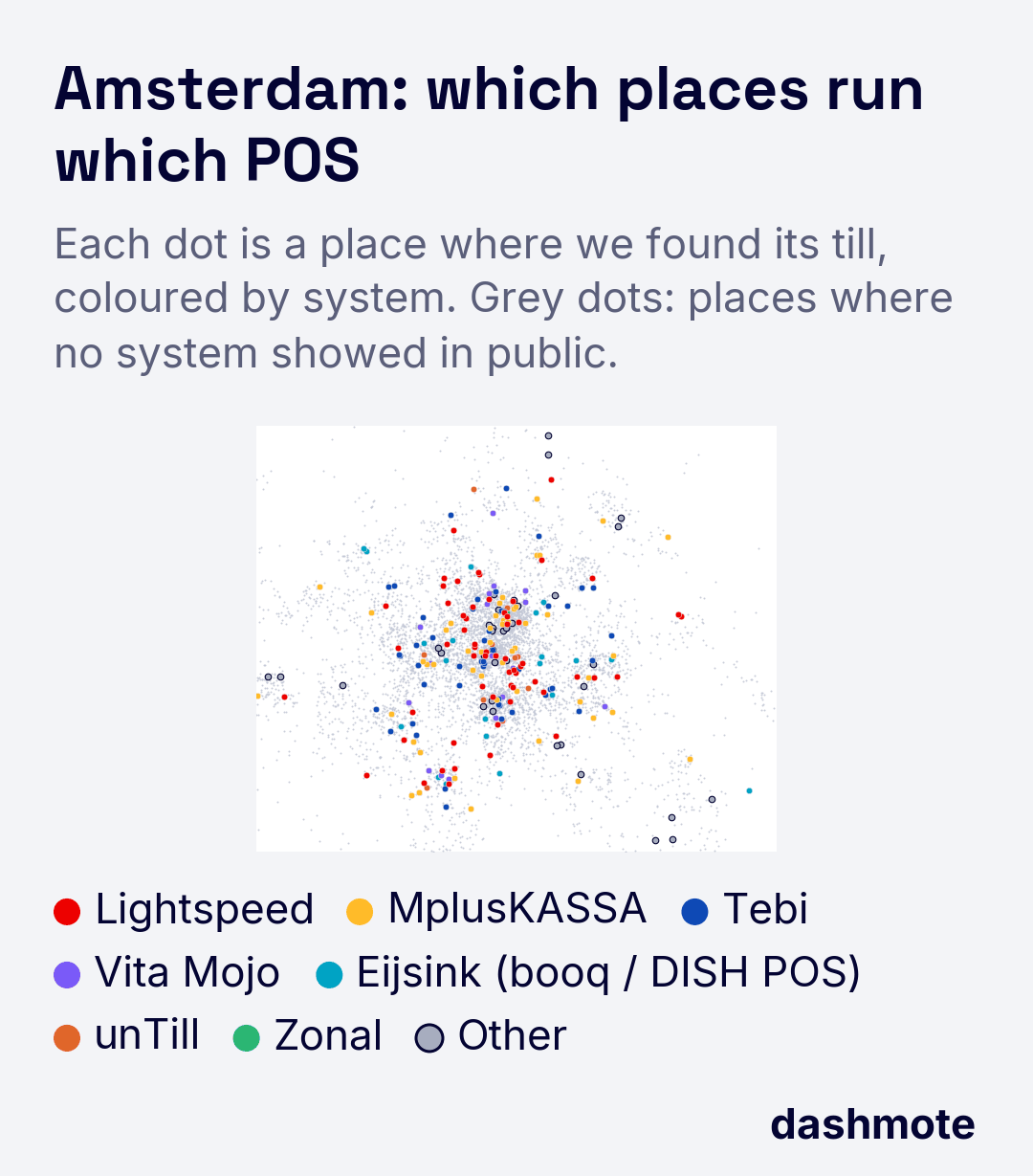
Amsterdam: the till stays behind the counter
Most Amsterdam venues do not show their POS in public, which is a story in itself: a supplier cannot look up a venue's system the way it can in New York.
- Lightspeed came up most often, mostly at independent sit-down restaurants.
- MplusKASSA came next, mostly at fast food and burger places run by multi-site brands.
- Tebi, founded in Amsterdam, at independent restaurants, cafes, ice cream and sandwich shops and wine bars.
- Further down: Vita Mojo at Mexican and health-food chains, Eijsink mostly at multi-site brands, unTill at restaurants and bars.
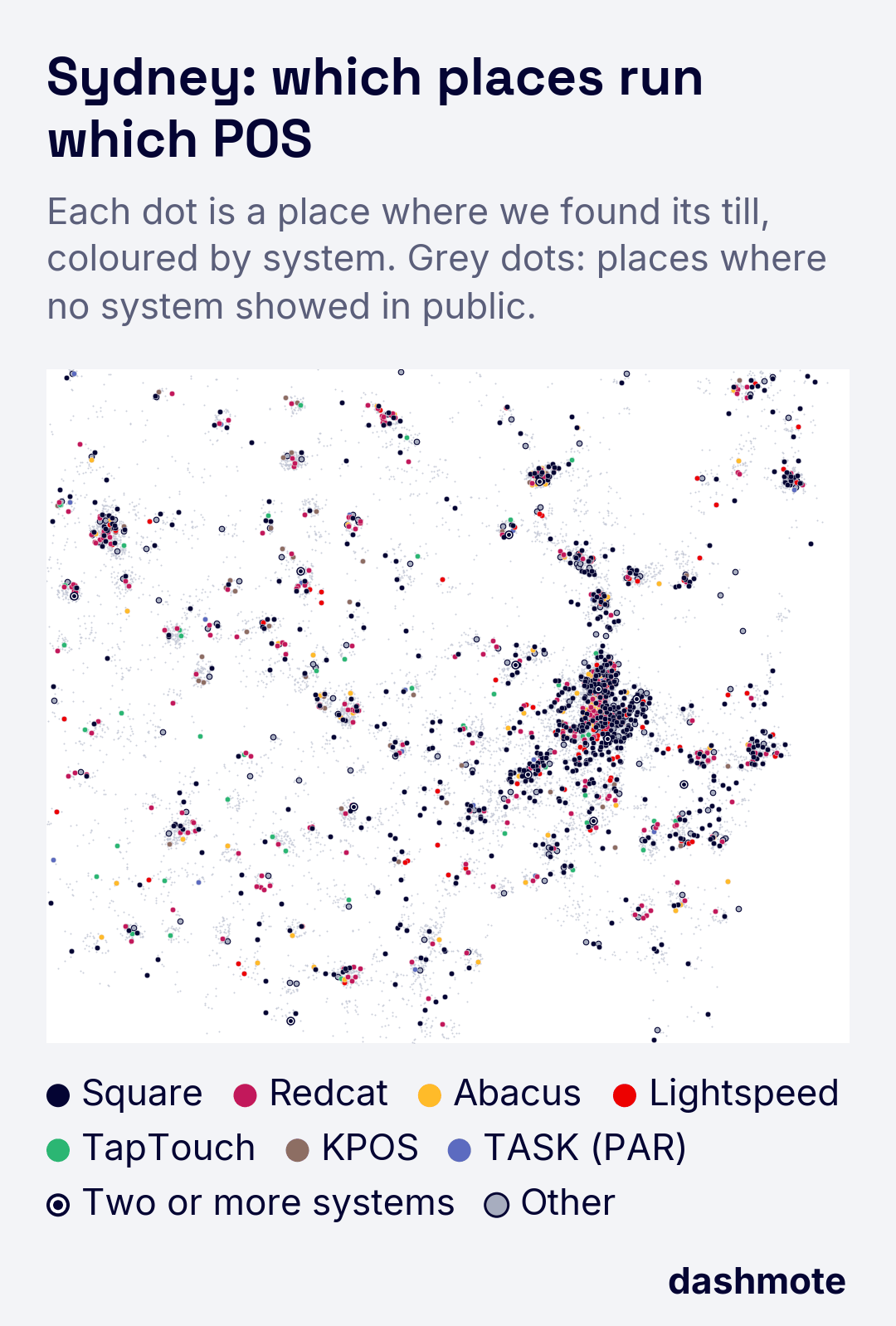
Sydney: the format of the venue decides
- Square came up most often: cafes and coffee places first, then restaurants of every kind, mostly independents.
- Redcat is the chains' system: bubble tea, juice, burger and chicken shops, almost all of them multi-site brands.
- Abacus leans towards Asian restaurants, with Italian restaurants and cafes too.
- KPOS turns up at Japanese, Korean and sushi restaurants, Lightspeed at cafes and Italian and French restaurants, TapTouch at fast food, kebab and chicken shops.
How teams use POS system data
- POS and payments companies. List the venues on a rival system, by kind of place, and see where each system is strong before you plan a territory.
- Ordering and loyalty apps. Pick the venues on systems you integrate with, so the first conversation is about value, not about integration work.
- Food and drinks brands. Segment accounts by system: a cafe on Square and a Chinese restaurant on MenuSifu need different partners and a different pitch.
- Everyone. Treat a visible system as a signal: a venue whose POS shows in public usually also runs online ordering, gift cards or loyalty.
Frequently asked questions
What is a restaurant POS system?
The point-of-sale system is the till and checkout software a restaurant, cafe or bar uses to take orders and payments. It often also holds the menu, the prices, online ordering and the loyalty programme.
Which POS do New York restaurants use?
Of the New York restaurants, cafes and bars where we can see the system, Toast runs 44% and Square 30%, as of October 2026. Cafes lean to Square, bars to Toast, and many Chinese restaurants run MenuSifu or Chowbus.
Is this a market share?
In New York it is the share of the places where the system can be seen, which is 29% of all places. In London, Amsterdam and Sydney we show what we found, the systems seen most often and the places that run them: shares of the smaller set where the till shows.
Does POS here mean POS materials?
No. This page is about the point-of-sale system. For posters, menus and fridges in the venue, see POS material detection.
How do I get the data?
As a list of venues with their POS system, next to the outlet profile, for the city or territory you sell into. Ask for a sample on the demo page.
Related reading
For sales leaders: the business case
Knowing the POS by venue turns "can we run this here?" into a list.
- Integrations planned city by city. Two systems cover most of New York's visible market; London, Amsterdam and Sydney each need a different set.
- The right partner per account. Reps bring the partner the venue's system already works with.
- Digital operators first. Venues that show their system tend to run more online tools, so they are quicker to say yes.