
Cooler detection and purity audit: see what fills the coolers you pay for
Cooler detection reads the public photos of a venue and shows whose cooler stands in it and what is inside, on the same outlet records as the rest of DashLeads: 20M+ venues in 60+ countries. Brands pay for coolers so their drinks stand cold at eye level. Then the cooler fills up with a rival's cans and a tray of desserts. Now you see it venue by venue, before anyone walks in.
- Cooler brand
- Unbranded cooler
- SKUs inside
- Cooler purity
- Photo and date

Whose cooler is in there, and which ones are open to claim?
A cooler is the most valuable square metre in a small venue. The brand on the door gets eye level, the cold product and the guest's first pick.
That is why drinks brands place coolers. And why they lose track of them: a store audit covers the accounts you visit, not the rest of the territory.
Step 1: whose cooler is it? Yours, a competitor's or nobody's
Every venue photo is checked for a drinks cooler: upright, back-bar or counter-top. Each cooler gets one of three tags, and each tag leads to a different next step.
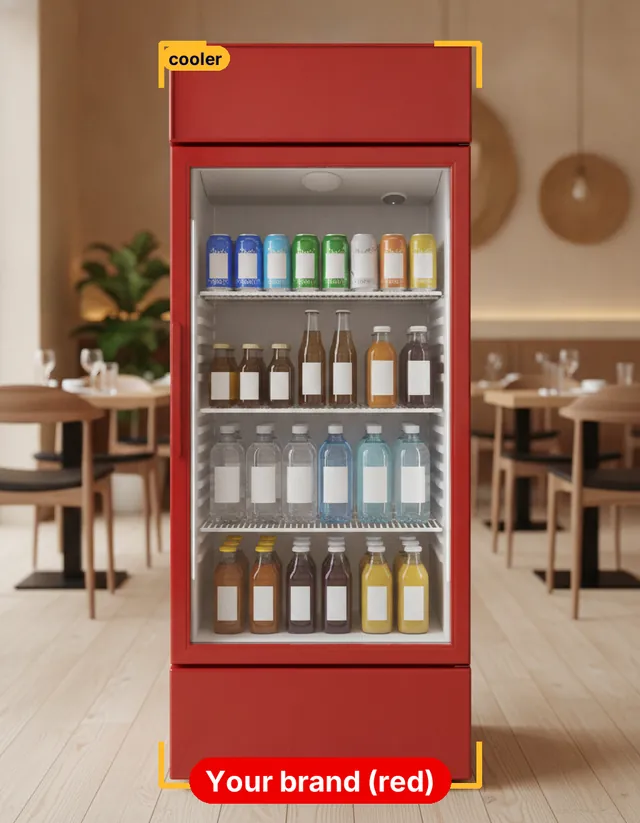
- Your brand (red): your cooler. The next question is what stands inside it.
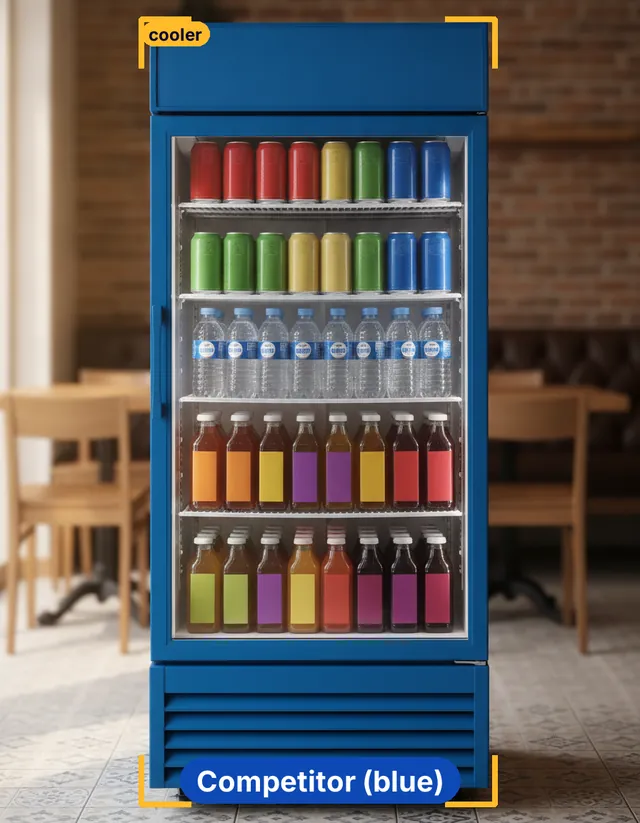
- Competitor (blue): usually tied to an agreement. A long-term target, not a lost venue.
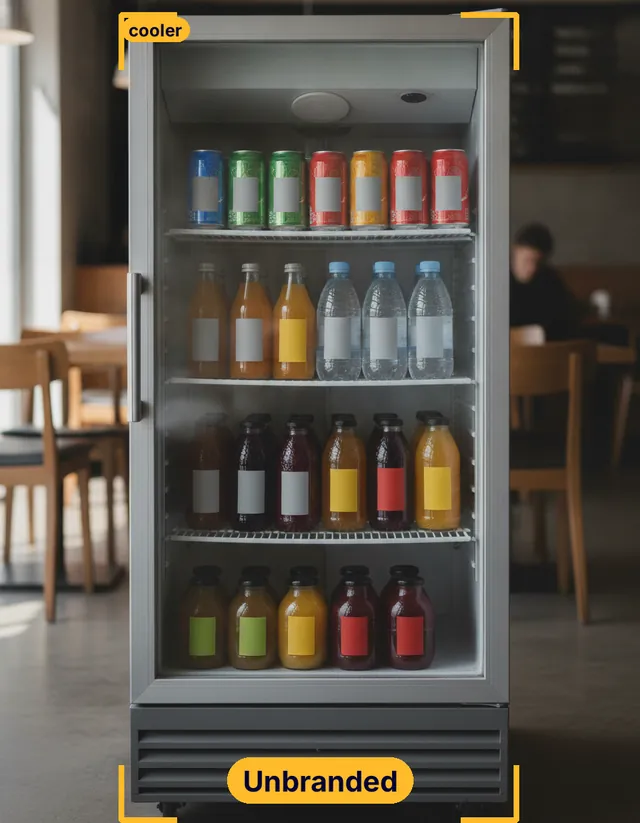
- Unbranded: bought by the venue itself. The easiest placement to win.
Step 2: is your cooler pure? Every SKU on the shelf, counted
A branded cooler is there to sell its owner's drinks. Cooler purity checks whether it does.
Every visible product is tagged twice: by group (your brand, competitor drinks or everything else) and by SKU type (330 ml can, 250 ml energy can, 500 ml PET bottle, glass bottle, water, juice).
Cooler purity = your-brand items / all visible items. Under a supply agreement it should be 100%. Often it is not: a rival's energy cans on the second shelf, desserts on the bottom one.
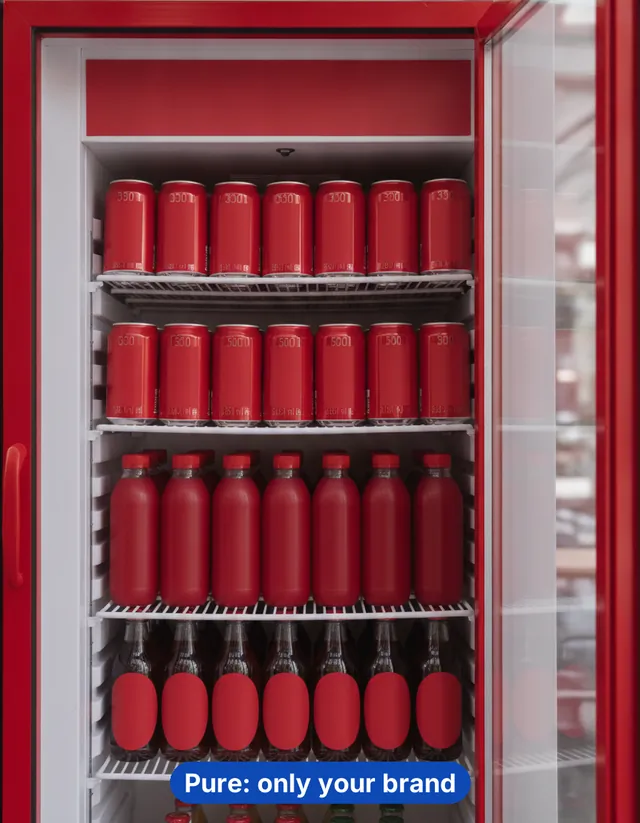
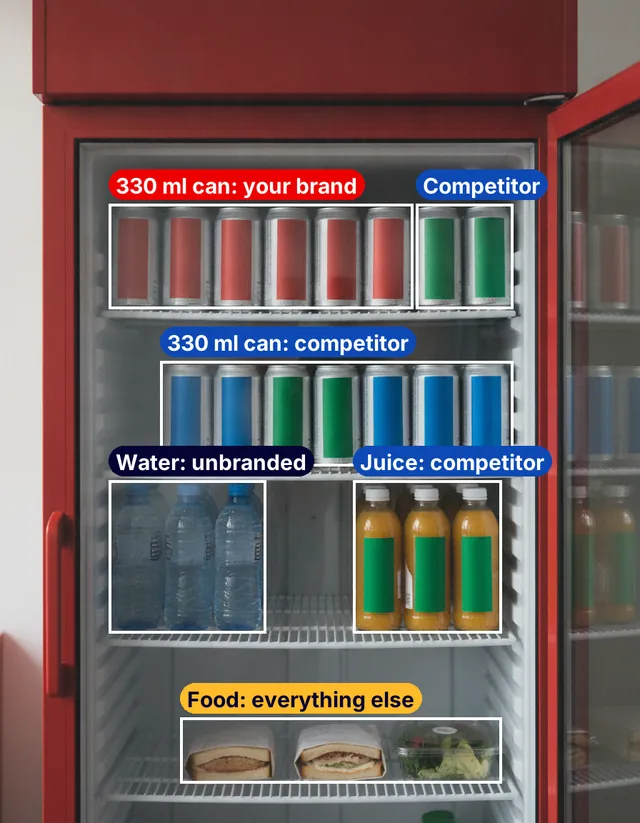
Illustration: one example cooler with 24 visible items.
Step 3: score the whole list. Nobody checks the coolers your distributors service
One cooler is a finding. An account list is a programme.
Many venues are serviced by distributors, not by your own reps. The cooler came with an agreement. After that, nobody from the brand stands in front of it, so nobody checks what is inside.
The audit rolls every venue into one table: the cooler, its purity and one audit score for the area or account list. You see which coolers to fix, and which distributor to call.
Illustration: an example with fictional venues and figures. Audit score = average purity of the coolers that carry your brand.
How it works: from a restaurant photo to the cooler on the outlet record
The same photos that build the outlet record, read for coolers. Two sources feed it: listing photos and delivery-app photos of the venue. Photos your reps take on a visit are read the same way.
- 1
Find the cooler
Each photo of the venue is checked for drinks coolers, wherever they stand in the frame.
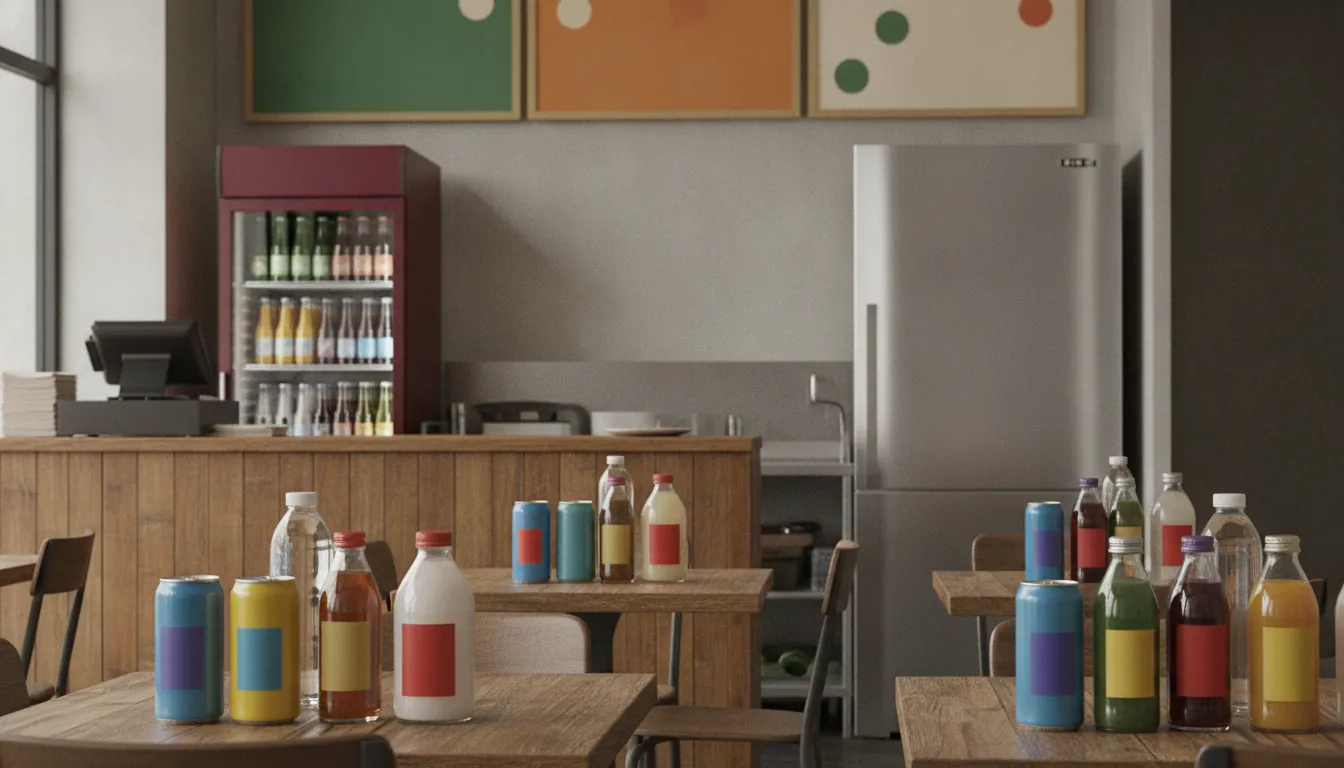
Restaurant photo: one cooler found - 2
Tag the brand and every SKU
The cooler gets its tag: your brand, a competitor or unbranded. Each visible product gets its group and SKU type.
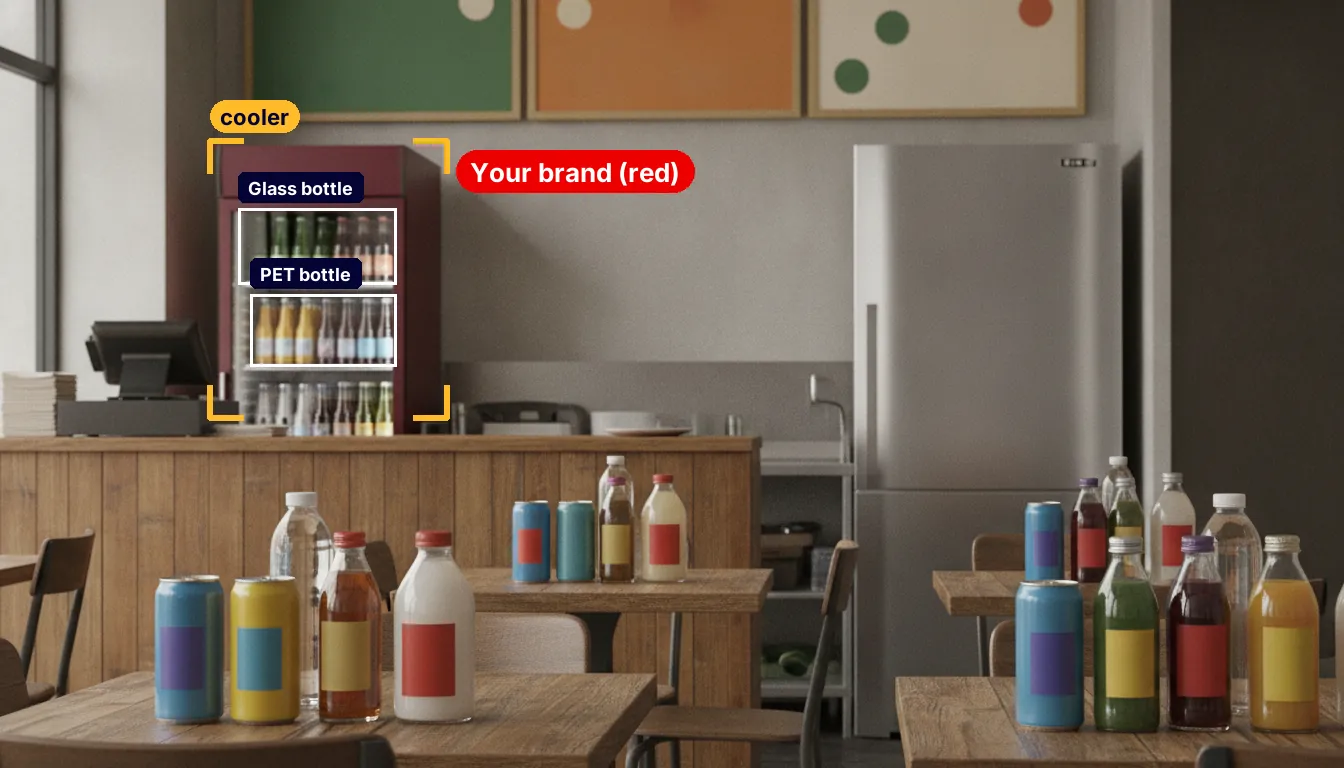
Illustration: the cooler and its SKUs tagged - 3
Add it to the outlet record
The read lands on the outlet profile with the photo and its date, next to the menu, the POS material and the lead score, so you filter on it like any other field.
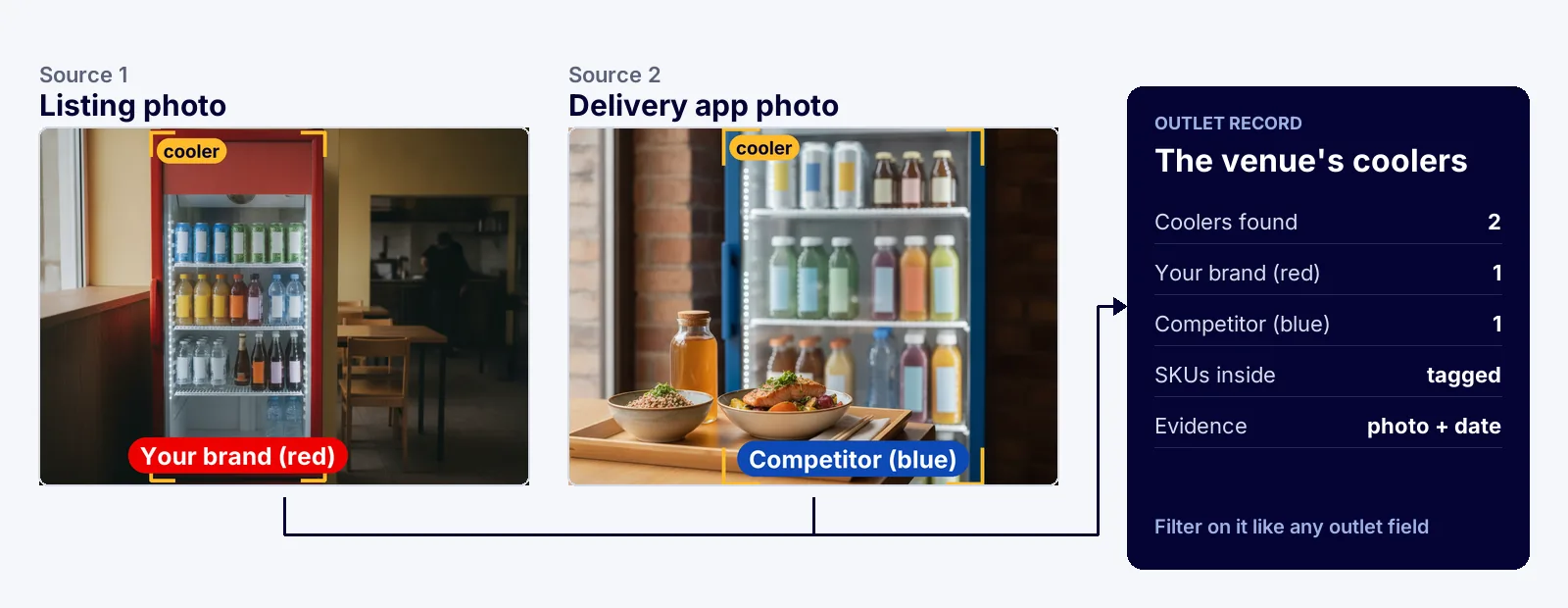
What you see per outlet
Each cooler read carries its evidence photo and the photo date.
| Field | What it tells you | Example read |
|---|---|---|
| Cooler brand | Your brand, a competitor's or none | Yours |
| Unbranded cooler | A fridge with no drinks brand, open to claim | No |
| SKUs inside | The SKU types on the shelves, by group | 330 ml cans, 500 ml PET, water |
| Cooler purity | Your brand's share of the visible products | 75% |
| Photo and date | The evidence, checked in a second | Public photo, with its date |
What it means for your commercial team
Cooler reads are a filter, a column and a tab on the outlet profile. The photo research is done, so the week goes to time with owners.
- Claim the empty coolers. Filter high-fit venues with an unbranded cooler. The easiest placements to win.
- Fix your own coolers. Sort your accounts by purity and open the call with the photo.
- Hold distributors to the agreement. Hand each distributor the list of its venues under your purity bar.
- Place coolers where they pay back. Count unbranded coolers in high-fit venues per area before the equipment budget is set.
- Keep competitor coolers on the list. A blue cooler is a long-term target, not a lost venue.
Frequently asked questions
What is a cooler audit?
A cooler audit checks the drinks coolers in a venue: whose brand is on them and what stands inside. Dashmote does it from date-stamped public photos, so you see prospects as well as your own accounts.
What is cooler purity?
Cooler purity is the share of a branded cooler's visible products that are its owner's own brand, from 0 to 100%. A pure cooler holds only its owner's brands; competitor drinks and everything else, such as food, lower the score.
What is a cooler audit score?
A cooler audit score is the average purity of your coolers across an area or account list. It shows in one number how well your coolers carry your brand, with each venue's cooler and purity listed behind it.
Can I see which SKUs are inside a cooler?
Yes, where the shelves are visible in the photo: each product is tagged by SKU type, such as a 330 ml can, a 500 ml PET bottle, a glass bottle, water or juice. Products hidden behind others or a misted door are not counted.
What is an unbranded cooler?
An unbranded cooler is a fridge with no drinks brand on it, usually bought by the venue itself. It is the easiest cooler to win, because no supplier agreement ties it to a competitor.
How fresh is the cooler information?
Every read carries the date of its photo, and old photos are excluded. You can filter on the latest photo date to work only with recent evidence.
Which markets have cooler reads?
Cooler reads are available in selected markets. Ask us about yours, and we will show you the coolers in a handful of venues you know.
Related reading
For sales leaders: the business case
Coolers are capital in the field. Purity shows whether that capital sells your drinks.
- Coolers that earn their cost. Find the coolers full of a rival's products and fix them before the next equipment review.
- One audit score per area. Follow purity per area, account list or distributor, without a store visit to every venue.
- One view for sales and trade marketing. Reps, equipment managers and trade marketing work from the same dated photos.