Hard Seltzers: Boom or Bust? A 2026 Update from European and Brazilian Delivery Menus
First published 6 February 2023. Updated October 2026 with 2026 data.

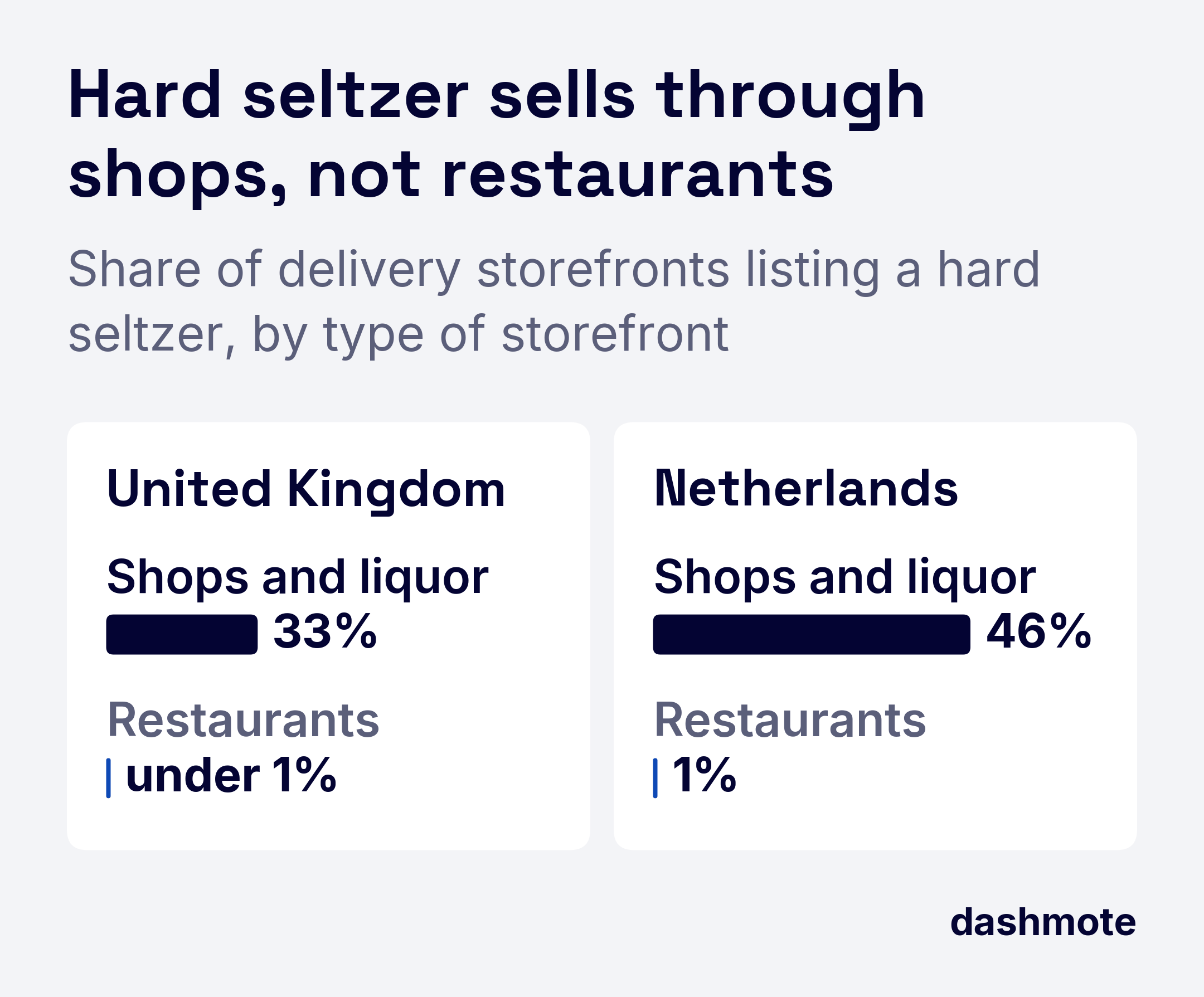
Hard seltzer on delivery is now a shop product: 33% of UK delivery shops list one, against under 1% of restaurants. One brand leads each market.
Key findings
- In the UK, 33% of shop, grocery and liquor storefronts on delivery list a hard seltzer, against under 1% of restaurants.
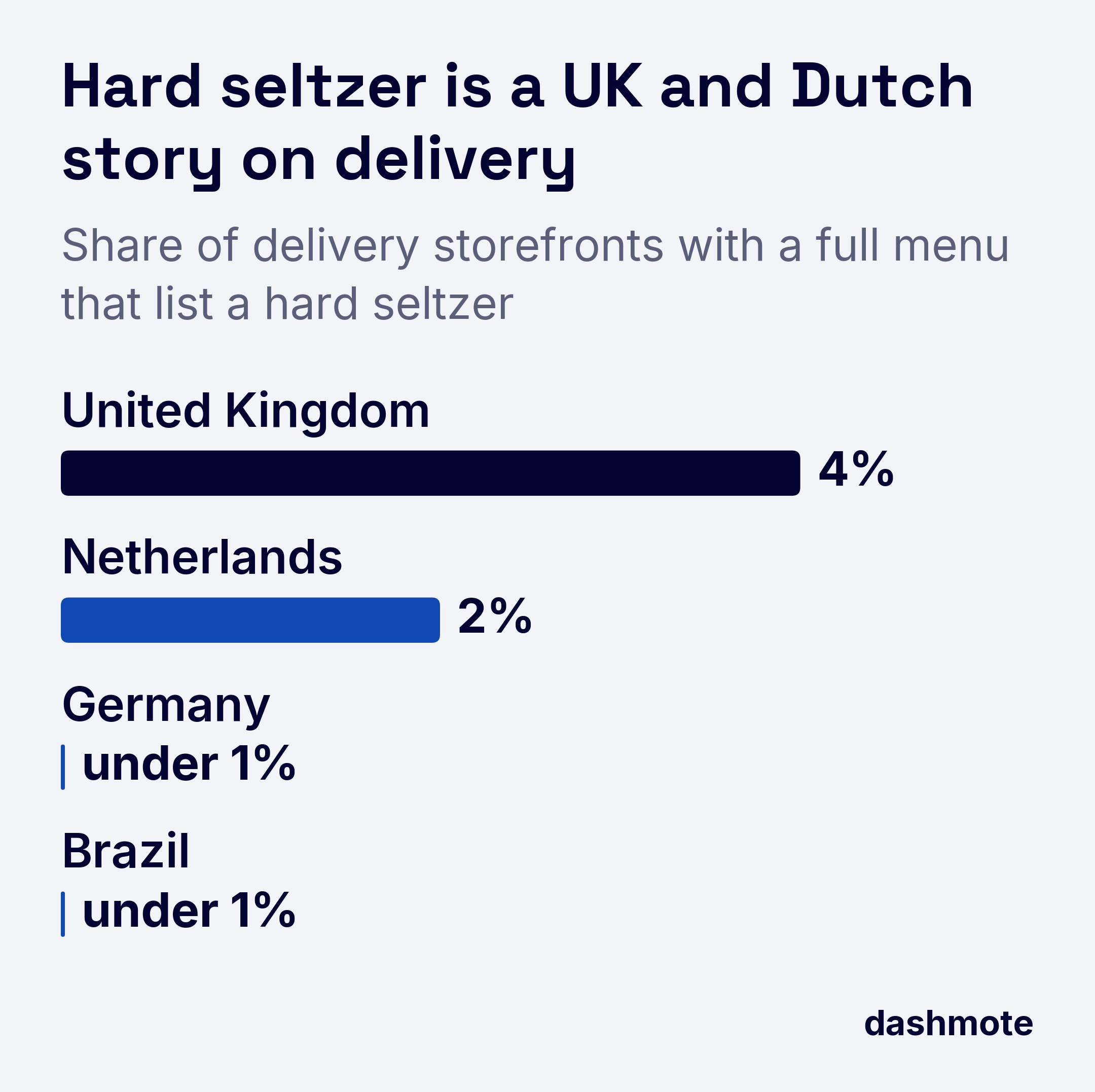
- Hard seltzer appears on 4% of UK delivery storefronts with a full menu and 2% in the Netherlands; in Germany and Brazil only a handful of storefronts list it.
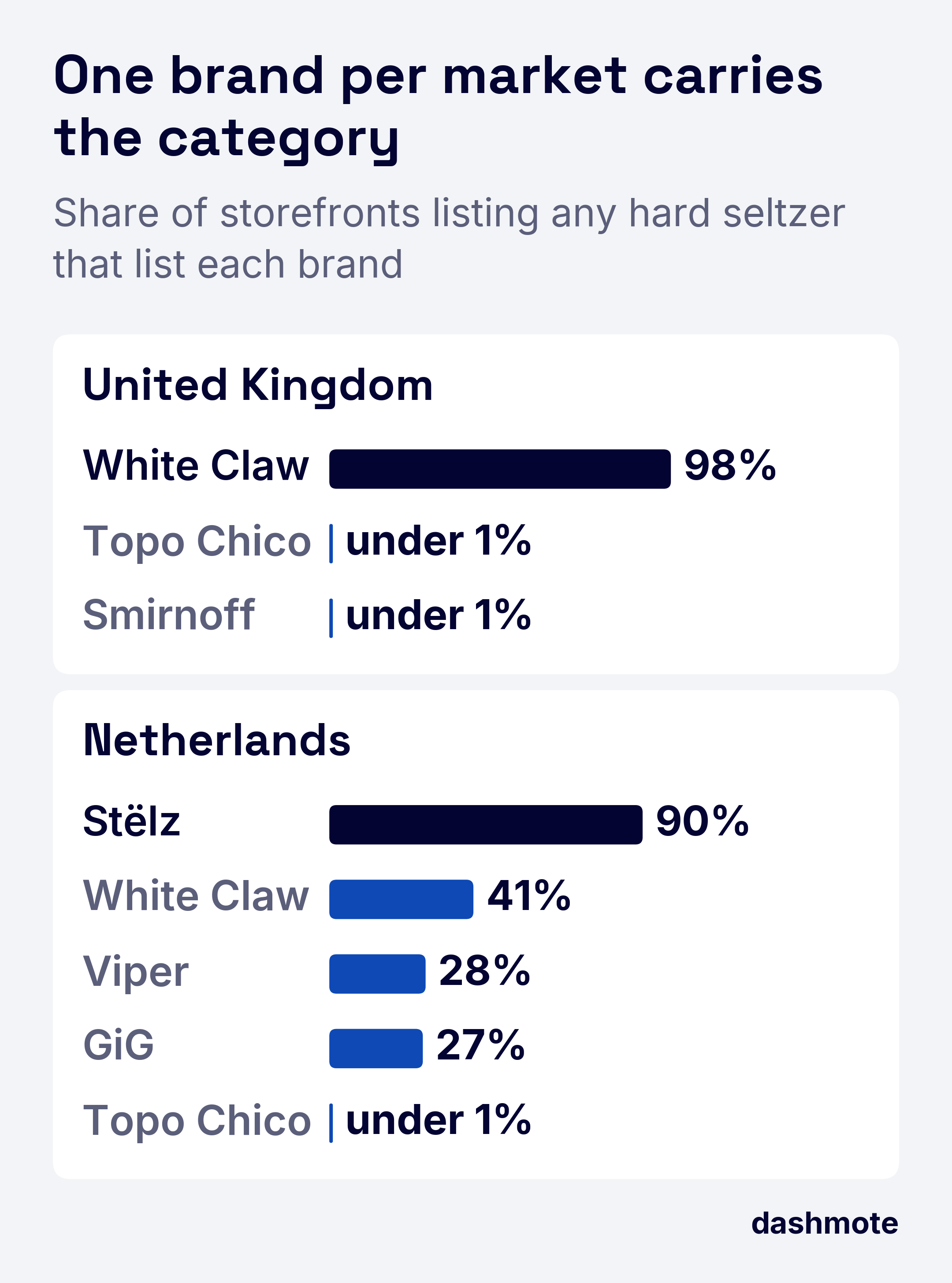
- White Claw is on 98% of UK storefronts that list any hard seltzer; Stëlz leads in the Netherlands at 90%.
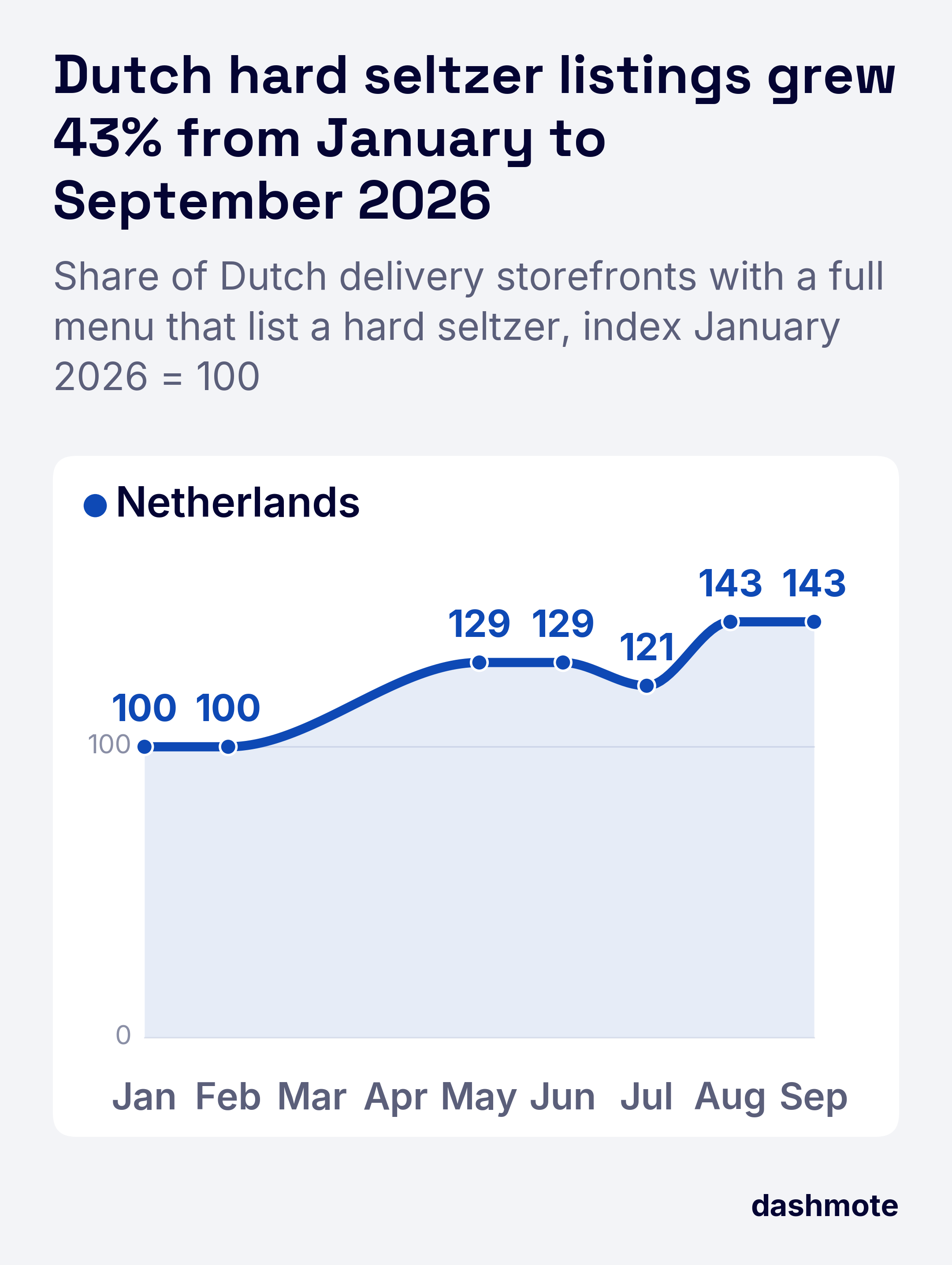
- Hard seltzer rose from 1% of Dutch storefronts with a full menu in January to 2% in September.
Hard seltzer did not fizzle out on food delivery, but it did change shape. In 2026 it is a shop product, not a restaurant one. In the United Kingdom, 33% of the shops, grocery and liquor storefronts on delivery apps list a hard seltzer, against under 1% of restaurants. In the Netherlands the split is 46% against 1%.
So the answer to "boom or bust?" depends on the door. In convenience and liquor delivery, hard seltzer is a fixture, led by one brand per market. On restaurant menus it never took off, and in Germany and Brazil it barely exists on delivery at all.
Hard seltzer is a UK and Dutch story
Two of the four markets carry almost all of the category. The figures cover the full delivery menus of 440,000+ storefronts with a full menu in the United Kingdom, 32,000+ in the Netherlands, 120,000+ in Germany and the leading app in Brazil. A hard seltzer appears on 4% of UK storefronts with a full menu and 2% in the Netherlands. In Germany and Brazil it is listed by a handful of storefronts.
This update reads the four markets where we parsed every item on every menu: the United Kingdom, the Netherlands, Germany and Brazil.
Shops sell it, restaurants do not
Hard seltzer on delivery lives in the beer fridge of the corner shop. We split storefronts into restaurants and shops (grocery, convenience, liquor) by what their menus sell. Of the UK storefronts that list a hard seltzer, 99% are shops, grocery or liquor storefronts and under 1% are restaurants. The Netherlands is the same story at a smaller scale: about 73% shops against 27% restaurants.
Price follows the channel. The median single can of White Claw costs £3.25 (about €3.79) across 30,000+ UK listings and €3.34 across 600+ Dutch listings. The few UK restaurants that list one charge more: a median of £5.50.
One brand carries the category in each market
In the UK, hard seltzer on delivery means White Claw. White Claw appears on 98% of the UK storefronts that list any hard seltzer. The Netherlands has a local leader instead: Stëlz is on 90% of Dutch seltzer storefronts, ahead of White Claw (41%), Viper (28%) and GiG (27%).
In the Netherlands, it is still growing
Month by month, the Dutch hard seltzer share rose through most of 2026. Hard seltzer rose from about 1% of Dutch storefronts with a full menu in January to 2% in September, with a small dip in July.
What changed since 2022
The category has narrowed from a crowded field to a single winner per market. The original article used Q4 2022 data from the United States and Canada. Then, Polar Seltzer was the most listed brand in the US with 25% of hard seltzer storefronts, White Claw had 20% and Truly 15%, and the top three each reached between 1% and 2% of all US storefronts (White Claw 2%). In Canada, White Claw held 53% of the category and reached 2% of storefronts.
In 2026 the markets differ, so read the levels side by side rather than as growth. Reach per market is higher: hard seltzer of any brand reaches 4% of UK storefronts, well above White Claw's 2022 reach in the US. And concentration is far higher: White Claw's 98% of UK seltzer storefronts compares with its 53% in Canada in 2022.
Why this matters now
Quick commerce has made the shop the default door for ready-to-drink alcohol. Shops on delivery apps now carry a curated fridge, and a brand that wins a slot there is in front of every late-night order. Restaurants, by contrast, still sell beer and wine with food, and seltzer has not found a place on that list.
What drinks brands should do
- Treat delivery shops as the core channel. For ready-to-drink brands, the shop and liquor storefronts on delivery apps are where the category lives; plan range, pack and price for them first.
- Expect one winner per market. The UK and the Netherlands each settled on a single leader. A challenger needs a clear local reason to be picked as the second can in the fridge.
- Test restaurants selectively. With under 1% of restaurants listing a hard seltzer, the restaurant door is open but untried; start with the cuisines that already sell premium mixers.
- Watch the months. The Dutch share rose by 43% between January and September 2026, with a dip in July; a monthly read shows whether growth holds into winter.
See where your drink is listed
Dashmote reads every item on every delivery menu, so you can see which shops and restaurants list your brand, which list a rival, and where the category is still missing. Get in touch to see the storefronts in your market that are ready for your range.