
What is perfect store?
Perfect store is a set of standards that describes what a brand's ideal execution looks like in an outlet, such as range, visibility, cooler, POS material, price and promotion, together with a score that measures each outlet against them; DashLeads tracks 20M+ venues. It turns "good execution" into a checklist a rep can complete and a manager can compare, so the visit goes to the conversation and not the clipboard.
The trusted intelligence layer for teams selling to Hospitality & Retail








Where the idea comes from
Perfect store started in supermarkets and convenience stores, where a brand defined the ideal shelf: the range, the facings, the price label, the promotion display. Field teams audited each store against it and scored the result. On-trade teams adapted it to bars and restaurants, where the shelf is the menu, the back bar and the cooler.
Usage varies. The same idea runs under names such as picture of success, perfect outlet or execution score, and most companies set different standards per channel and outlet tier, because a cocktail bar and a quick service restaurant have different jobs to do for a brand.
The formula
Perfect store score (%) = standards met / standards that apply to the outlet x 100
Only count the standards that apply. A restaurant with no drinks fridge cannot fail a cooler standard; leaving it in the denominator punishes the outlet for its format. A weighted variant scores each standard by importance, so a missing core listing costs more than a missing table tent. Keep the list, and any weighted version, fixed for a full cycle, or scores will not compare.
Worked example
Take a beer brand's standards in two outlets in one city, a pub and a restaurant.
| Standard | Pub | Restaurant |
|---|---|---|
| Core range on the menu | Met | Met |
| Brand named on the menu | Met | Met |
| Own branded cooler | Not met | Does not apply |
| POS material visible | Met | Not met |
| Price at or under the recommended serve price | Met | Met |
| Current activation running | Not met | Does not apply |
| Score | 4 / 6 = 67% | 3 / 4 = 75% |
The pub's next visit has two jobs: place a cooler and start the activation. The restaurant needs one: get POS material up.
Perfect store is not an audit
An audit is the act of checking; perfect store is the standard you check against. Numeric distribution counts whether an outlet stocks you at all; perfect store asks how well you are executed where you are stocked. A brand can have wide distribution and low scores, which means the next gains come from outlets it already sells to.
How Dashmote data helps
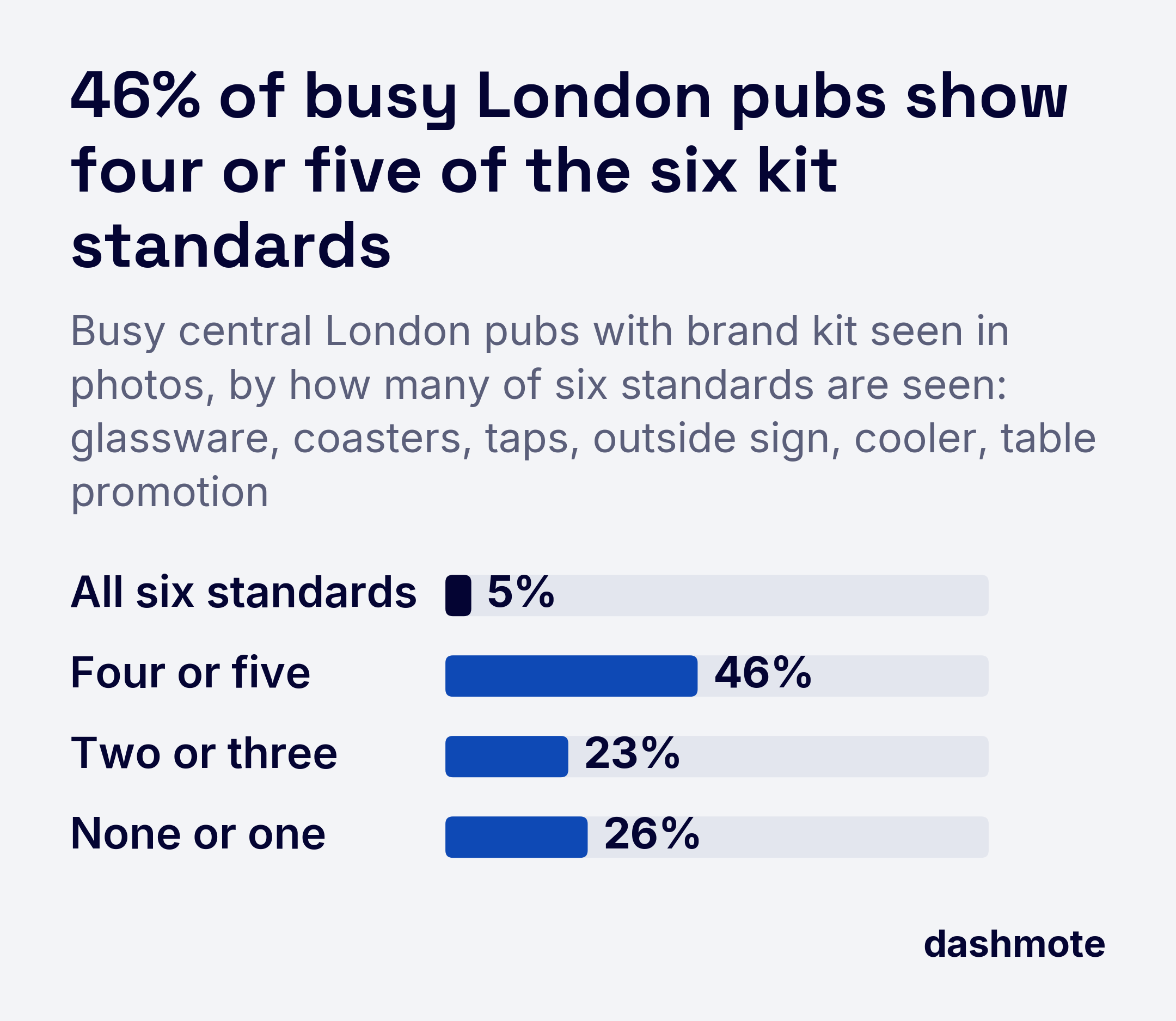
Part of a perfect store can be checked before anyone visits. Dashmote shows the brands named on each outlet's menu, and reads coolers and branded POS material in date-stamped public photos, with old evidence left out. Photo reads are available in selected markets. Ask us about yours. See the outlet execution audit and cooler purity. Delivery listings of the same outlets are in food delivery insights.
Frequently asked questions
What is a perfect store program?
A perfect store program defines the ideal execution of a brand in each type of outlet, audits outlets against it and scores them. The score shows reps what to fix and managers where execution is slipping.
Does perfect store work in the on-trade?
Yes, with standards built for bars and restaurants: menu listing, back bar, cooler, POS material, serve price and activations instead of shelf facings and price labels.
How often should outlets be scored?
Score key outlets at every visit and the rest of the territory at least once per planning cycle. Whatever the cadence, compare scores only within the same standard list.
Can a perfect store score be measured without a visit?
Partly. Menu listings and what appears in recent public photos can be checked remotely; price agreements, stock and staff knowledge still need a visit.