
What is outlet tiering?
Outlet tiering is the sorting of outlets into a few bands, usually A, B and C, by how much they are worth or could be worth to a brand, with a service rule attached to each band: how often it is visited, how much is invested and who owns it. A tier is a decision about effort, not a description of the outlet, and it shows which doors to knock on first.
The trusted intelligence layer for teams selling to Hospitality & Retail








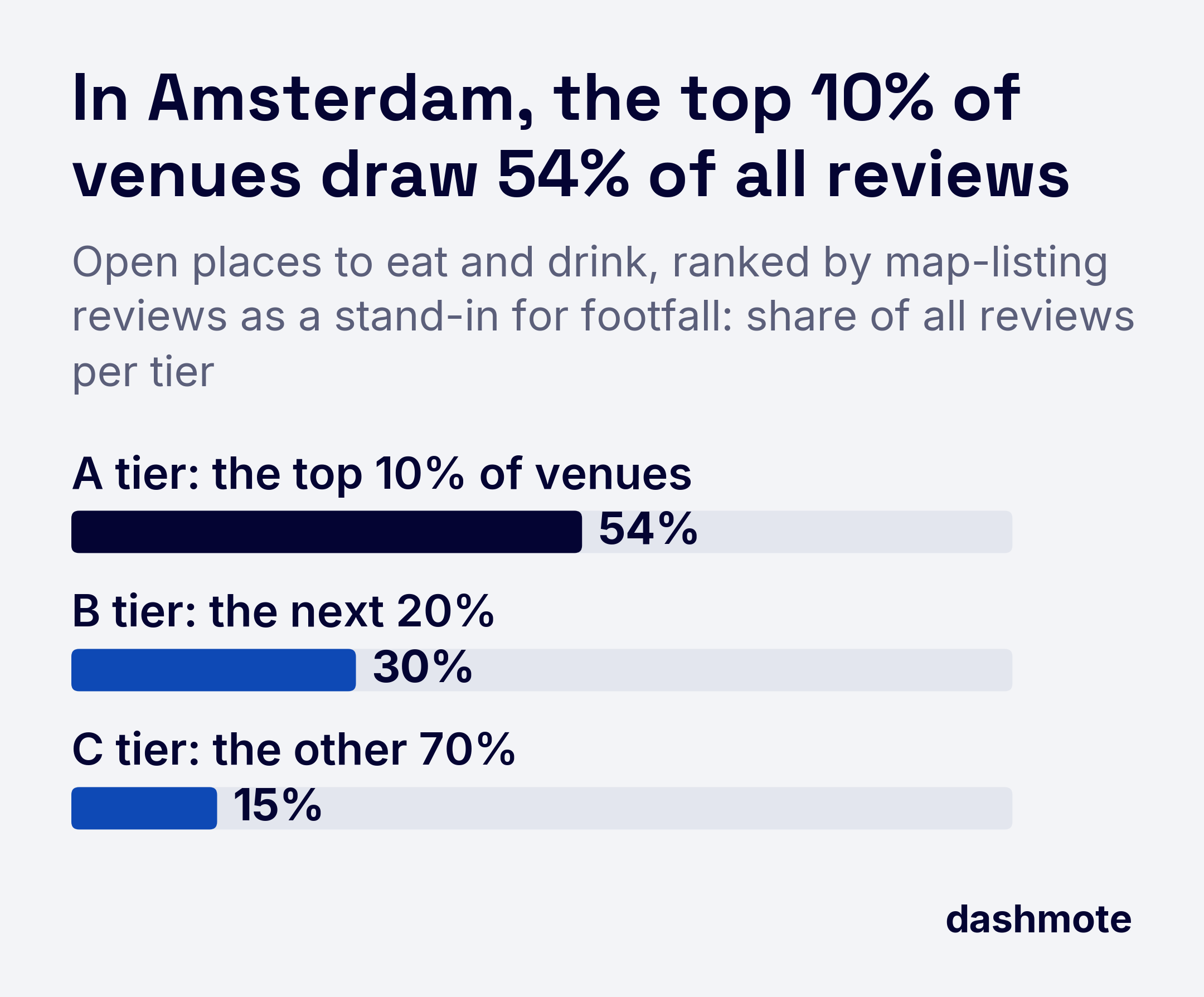
How to tier outlets
Most teams tier on two things: what the outlet is worth today (volume, margin, visibility) and what it could be worth (size, fit with the brand, growth). Customers are tiered on both; prospects only on potential.
Common cut: rank outlets by value or potential, then A = the outlets that make up the first part of the total, B = the next part, C = the rest.
A frequent split is that A covers about half the value, B the next third and C the long tail, but the cut-offs are a business choice. Usage varies too: some teams add a fourth band for group or key accounts handled centrally, or a strategic tier for image outlets that matter more for visibility than volume.
Service rules per tier
A tier means nothing until it changes what the team does. Write the rule next to the band.
- Visit frequency: how often a rep calls, see call frequency
- Investment: which outlets get coolers, POS material and activation budget
- Ownership: field rep, telesales or key account manager
- Review: when an outlet moves up or down, and who decides
Worked example
Take one rep's territory of 200 outlets in one city.
| Tier | Outlets | Visit rule | Visits per month |
|---|---|---|---|
| A | 20 | Twice a month | 40 |
| B | 60 | Once a month | 60 |
| C | 120 | Once a quarter | 40 |
| Total | 200 | 140 |
The rep has room for about 150 visits a month, so the plan fits with 10 visits to spare for new openings. If the team had put 50 outlets in tier A, the same rules would need 230 visits a month, and the tiering would collapse in the first week.
Tiering, segmentation and lead scores
Outlet segmentation says what kind of outlet it is: cocktail bar, gastropub, quick service. Tiering says how much effort it gets. A lead score is a number from 0 to 100; tiers are the bands you cut it into so a rep can act on it. Two cocktail bars in the same segment can sit in different tiers.
How Dashmote data helps
Describe your ideal account in plain words and Dashmote scores each outlet in the territory from 0 to 100 against it, reading menus, photos, delivery listings and reviews, customers and prospects alike, which teams cut into A, B and C bands. Tiers then become a filter, a map layer and a visit list, so reps spend the week with owners instead of on research. See foodservice lead scoring and sales territory planning.
DashLeads tracks 20M+ venues.
Frequently asked questions
What are A, B and C outlets?
A outlets are the few that matter most to the brand and get the most visits and investment; C outlets are the long tail served at the lowest cost; B outlets sit between.
How many tiers should I use?
Three is the most common because a rep can remember the rule for each. Add a fourth only for a different way of serving, such as accounts managed centrally.
Should prospects get a tier?
Yes. Tier prospects on potential so the best new outlets get visits before low-value current customers; otherwise the plan only ever serves the existing book.
How often should outlets be re-tiered?
At least once per planning cycle, and whenever an outlet opens, closes or changes owner. Tiers based on last year's sales drift as the market moves.
What is the difference between tiering and segmentation?
Segmentation groups outlets by what they are; tiering ranks them by what they are worth to you. Both are needed, and they answer different questions.