
What is on-trade activation?
An on-trade activation is a time-bound brand programme run inside bars, pubs, restaurants or hotels, such as a menu feature, a sampling night, a branded event or a serve promotion, designed to get guests to try or order a product at the venue; DashLeads tracks 20M+ venues that could host one. A listing gets the product into the venue; an activation gets it ordered, and the opportunity is picking the venues where it will.
The trusted intelligence layer for teams selling to Hospitality & Retail








Common types of activation
Activations range from a two-hour tasting to a season-long programme across hundreds of venues. Most combine several of these elements, agreed with the venue in advance.
- Menu feature: a signature serve or pairing named on the menu for a set period
- Sampling and tasting: brand ambassadors pouring for guests
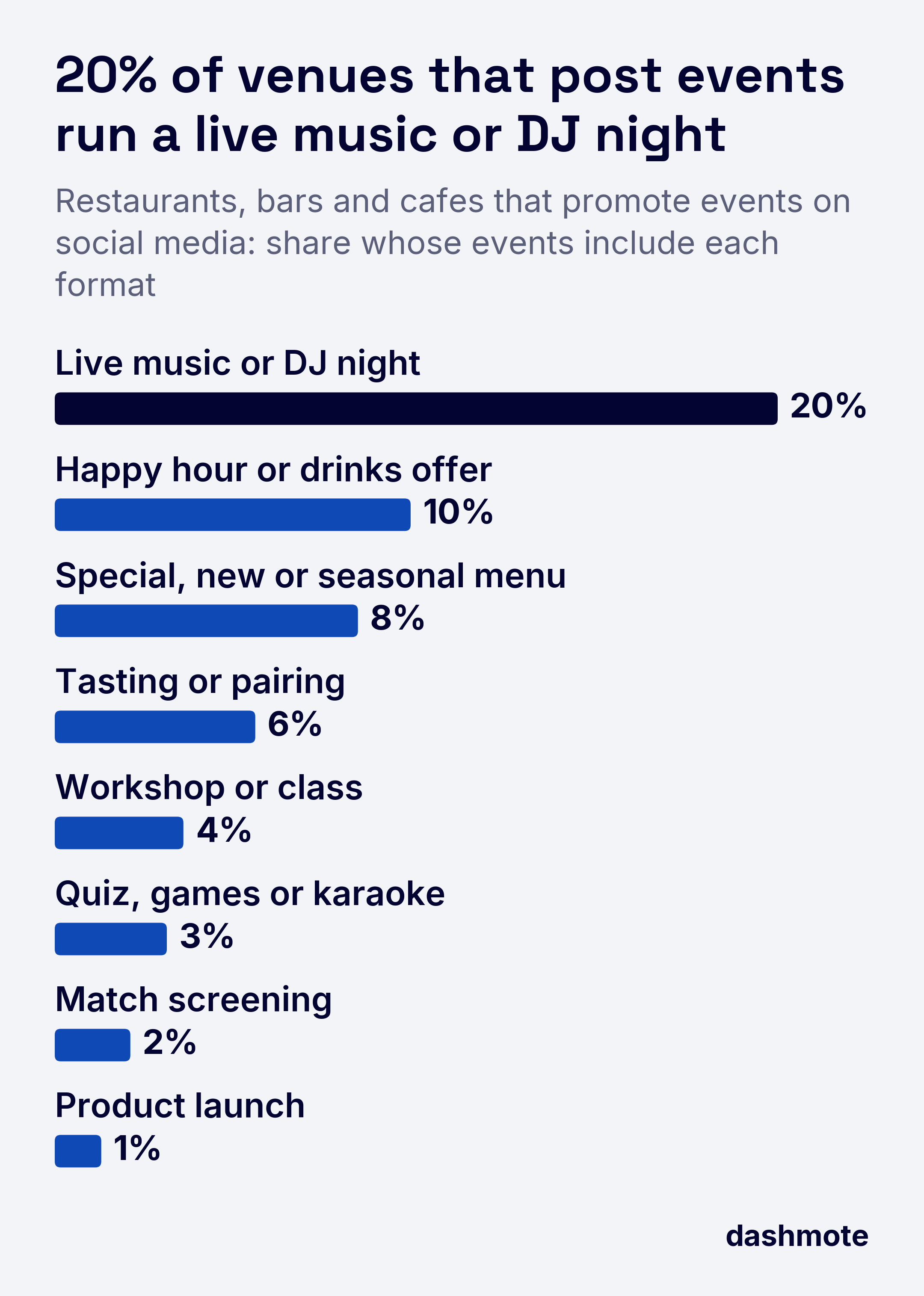
- Branded event: a quiz, a match screening, a music night or a launch party
- Staff training and incentives: so the bar team recommends the serve
- Visibility kit: POS material such as glassware, menus and signage
- Social and creator content: posts by the venue or by creators who visit
How to measure it
Activation uplift (%) = (sales during the activation - baseline sales) / baseline sales x 100
The baseline is the same venues over a comparable period before the activation, or better, a matched control group of similar venues that did not take part. Without one, an activation that ran over a sunny holiday weekend looks like a success it was not.
Two more numbers complete the picture: participation (venues that ran the activation as agreed / venues signed up) and retention (venues still listing or serving the product some weeks after it ends).
Worked example
A premium mixer brand runs a four-week signature serve programme in 20 cocktail bars in one city and keeps 20 similar bars as a control group.
| Activation bars | Control bars | |
|---|---|---|
| Cases in the 4 weeks before | 400 | 380 |
| Cases in the 4 activation weeks | 520 | 399 |
| Change | +30% | +5% |
Raw uplift in the activation bars is 30%. The control bars grew 5% over the same weeks, so the uplift you can credit to the activation is about 25 points. 17 of the 20 bars ran the serve as agreed: a participation rate of 85%. Four weeks after the end, 14 still list it, and that is the number the next budget conversation should start from.
Activation vs trade marketing vs listing
An activation is a time-bound programme in the venue aimed at the guest. Trade marketing is the wider function that plans spend aimed at the trade: the activations, the POS, listing incentives and outlet programmes. A listing is the outlet agreeing to stock or name the product. An activation in a venue that does not list you is a sampling exercise; one in a venue that does is a sales driver. Many teams use the activation offer as the reason to secure the listing.
Choosing the venues
A lot of activation budget is lost on the wrong rooms: a quiz night in a bar that never runs events, a cocktail feature in a venue that mostly sells beer. Before signing venues, check what each one already pours, whether it runs events and posts about them, and which creators mention it.
Dashmote reads each outlet's menu, social activity and creator mentions, so the shortlist starts from venues that already pour the category and draw the right crowd, without hours of desk research. See outlet social media data and creator mentions per venue.
Frequently asked questions
What is the difference between an activation and a promotion?
A promotion changes the price or the offer, such as a happy hour serve, while an activation is a broader in-venue programme that can include a promotion but also events, staff training, visibility and content.
How long should an on-trade activation run?
Long enough to cover the venue's normal trading cycle and show repeat orders: from a single event night up to several weeks for a menu feature. Short runs mostly measure trial; longer runs show whether the serve stays.
How do you choose venues for an activation?
Choose venues where your target guest already goes and the category sells: the right venue type, a menu that already lists the category, active with events and social posts, mentioned by creators your guests follow, and either listing your product or open to it.
How do you prove an activation worked?
Compare the participating venues with a baseline period and with a control group of similar venues that did not take part, then check how many still list or serve the product weeks after the end.
Who pays for an on-trade activation?
Usually the brand, from its trade marketing budget, sometimes shared with a distributor or with the venue through free stock, staff incentives or a listing agreement. The split is commercial and varies by market.