
What is a first-party ordering channel?
A first-party ordering channel is an ordering app or website that a restaurant, chain or brand owns and runs itself, as opposed to a third-party delivery app that lists many restaurants side by side; Dashmote tracks 15M+ third-party delivery storefronts, the channel first-party ordering is compared against. For a drinks or snacks brand, it is a second menu for the same outlet, often with different items, prices and combos, and a second place to win a listing.

The trusted intelligence layer for teams selling to Hospitality & Retail








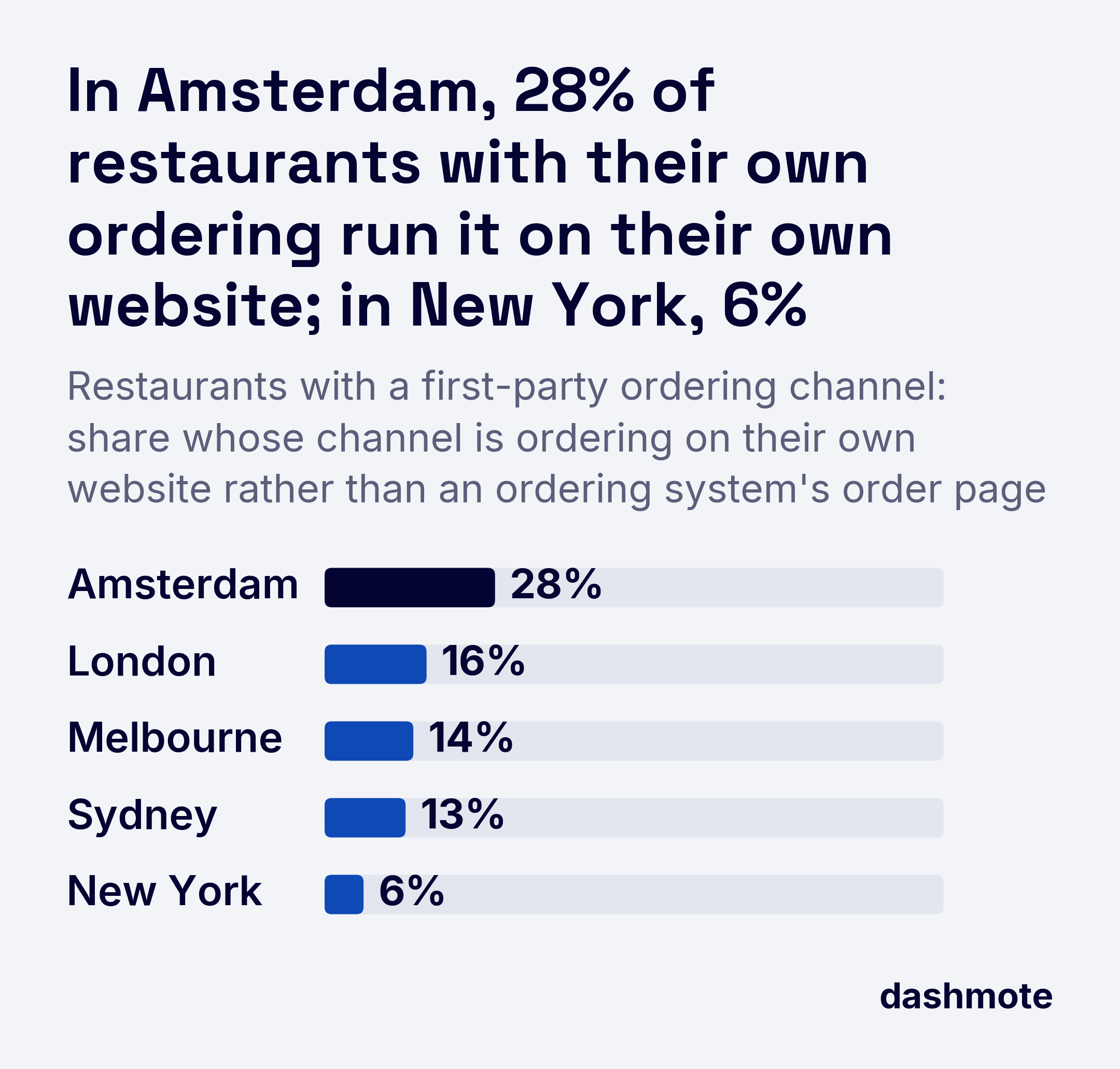
What counts as first-party
The defining question is who owns the ordering page and the customer relationship. A chain's own app, its website ordering and its loyalty app are first-party. A listing on a delivery app that shows many restaurants is third-party, also called a marketplace or aggregator.
Delivery itself can go either way. A first-party order may be delivered by the restaurant's own riders or by a courier company working in the background (often called white-label delivery). Usage varies: some teams also count in-store kiosks and table ordering as first-party channels; others keep them under dine-in. State your boundary.
How to measure it
Without order data, brand teams compare the two menus of the same outlet.
Range overlap (%) = items on both menus / items on the first-party menu x 100
Channel price gap (%) = (third-party price - first-party price) / first-party price x 100
Add a third check by hand: which combos and meal deals exist in each channel, and which drinks or snacks sit inside them.
Worked example
Take a quick service chain in one city and a soft drink brand, with prices in price units.
- The chain's own app lists 60 items; its storefront on a third-party app lists 48. 44 items appear on both. Range overlap = 44 / 60 = 73%.
- The own app lists 8 drinks, with the brand in 2 combos. The third-party menu lists 6 drinks and the brand in no combo.
- The brand's can costs 2.50 on the own app and 3.00 on the third-party app. Channel price gap = (3.00 - 2.50) / 2.50 = 20%.
A team that only watches the third-party app sees a brand missing from combos. The own app shows the chain already pairs it with meals, which makes the third-party gap an easy ask.
First-party ordering is not first-party data
The words overlap, the meanings do not. First-party data is data a company collects about its own customers, from any channel. A first-party ordering channel is a place to order. The channel produces first-party data for the restaurant, which is one reason chains push shoppers towards it, but a brand team looking at menus works with neither the orders nor the customer records.
How Dashmote data helps
Dashmote tracks restaurant delivery storefronts on third-party apps, per outlet, with range, prices and combos. Tracking of restaurants' own ordering apps and websites next to them is available in selected markets. Ask us about yours. See first-party delivery tracking. The outlet record behind it is in outlet intelligence.
Frequently asked questions
What is the difference between first-party and third-party ordering?
First-party ordering runs on the restaurant's own app or website; third-party ordering runs on a delivery app that lists many restaurants. The restaurant owns the customer relationship only in the first case.
Are prices lower on a restaurant's own app?
Often, but not always. Many outlets add a mark-up on third-party apps to cover commission, so their own channel can be cheaper; compare item by item rather than assume.
Does first-party ordering mean the restaurant delivers itself?
No. A first-party order can be delivered by the restaurant's own riders or by a courier company in the background; what makes it first-party is who owns the ordering page.
Why should a drinks brand care about first-party ordering?
Because the same outlet can carry a different drinks range, different prices and different combos there. A gap on one channel may already be solved on the other, or the reverse.