5 Reasons CPG Brands Should Track Their Product Prices on Food Delivery Platforms

On delivery apps the outlet sets the price of your product. Five reasons CPG brands should monitor delivery prices outlet by outlet, platform by platform.
Key findings
- On a delivery app the outlet, not the brand, sets the menu price, and the same product can carry a different price on each app.
- Benchmarking your price against competitors in the same outlets shows where you are priced out or undervalued.
- Dated price observations show whether a promotion was passed on, and whether prices moved back afterwards.
- Outlet-level price data turns account reviews with restaurant partners into a conversation about facts, not anecdotes.
- Consistent pricing across platforms protects the brand's price image with shoppers.
On a food delivery app, the outlet sets the price of your product, not the brand. Many outlets add a delivery mark-up, and many set a different price on each app, so the same 330 ml can can carry three different prices in one city on the same day. As a CPG brand, you rarely see those prices unless you go and look for them.
Having a good handle on those prices gives a brand a real advantage. Here are five reasons to keep a close eye on them.
1. Competitive pricing analysis
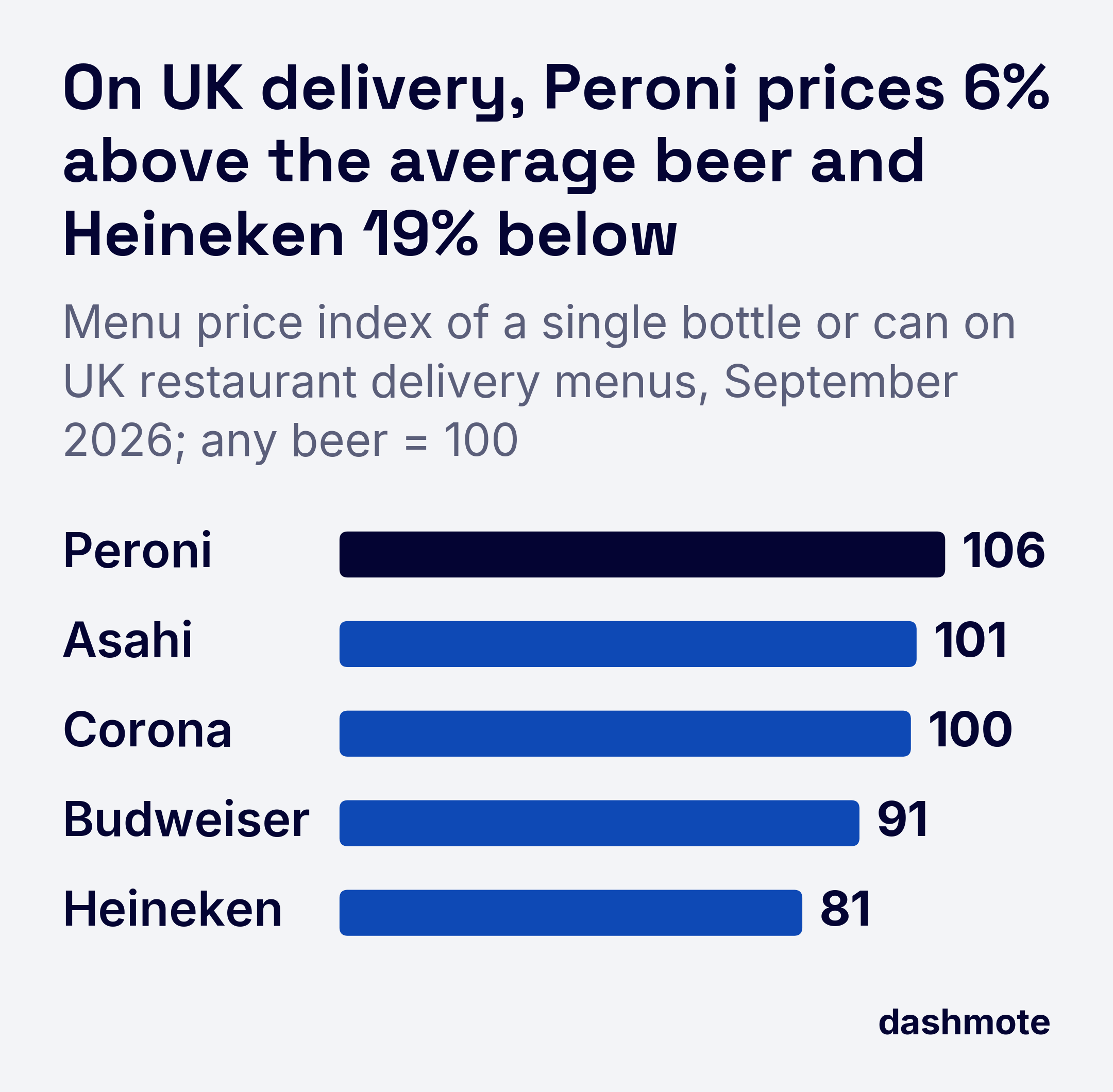
Knowing how your products are priced in different outlets lets you hold a competitive edge. With outlet-level price data you can benchmark against competitors on the same menu and see where you stand against comparable products. A menu price index makes that comparison simple: set a reference price to 100, and an index of 112 means 12% more expensive than the reference. The goal is a price that is neither so high it deters a purchase nor so low it undermines the value of the brand.
2. Better revenue management
Price monitoring is the base of effective revenue management. With detailed price insight you can see where margins hold and where they leak, and balance volume against profitability by market and by platform. Dated observations also show what happens around a promotion: whether outlets passed the discount on, and whether prices moved back once it ended. That turns promotion planning from a guess into a before-and-after you can measure.
3. Stronger partnerships with outlets and platforms
Accurate price data makes for stronger partnerships with restaurants and delivery platforms. Account reviews start from an outlet list with prices, platforms and dates rather than from anecdotes, which leads to better negotiations and more favourable terms. Strong partnerships, in turn, tend to mean better placement and promotion of your products on the menu, so both sides benefit.
4. Brand positioning and consumer perception
Consistent pricing across channels is essential for a strong brand image. When one outlet lists your product far above the rest of the city, or one platform runs well above another, shoppers notice before you do. Monitoring prices across platforms lets you spot overpricing early and act on it, which protects both the brand's reputation and shopper trust.
5. Market and consumer insights
Detailed price data also says a lot about the market. It shows how prices differ by city, platform and type of outlet, how much room a category has before shoppers trade down, and where a competitor is building share on price. Those insights feed pricing decisions as well as marketing: campaigns can be aimed at the cities and platforms where your price position is strongest.
From prices to a monthly routine
Most brand teams turn delivery price data into three habits: a monthly list of outlets whose prices moved beyond a set threshold, a monthly read of their price index against named competitors per city, and a check on every promotion before, during and after it runs. Delivery price monitoring gives each of those lists the outlet, platform and date behind every price.
Conclusion
For CPG brands, knowing what each outlet charges for their products on each delivery platform is not just about numbers; it is about gaining a strategic advantage. From competitive pricing and revenue management to partnerships and brand positioning, outlet-level price data helps brands make informed decisions in a fast-moving channel.
Dashmote monitors delivery prices on 100+ platforms in 60+ countries. See how delivery price monitoring works, or get in touch to set up a free trial and see your own products' prices.
Related: Delivery price monitoring, menu price index and food delivery insights.