
What is share of menu?
Share of menu is the share of all the items listed in a category, across a defined set of menus, that belong to one brand, product or type; DashLeads has read 5M+ menus. Where menu penetration counts the outlets that list you, share of menu shows how much of each list is yours, and so where you can win more serves.
The trusted intelligence layer for teams selling to Hospitality & Retail








The formula
Share of menu (%) = menu lines in the category that name X / all menu lines in the category, across the same menus x 100
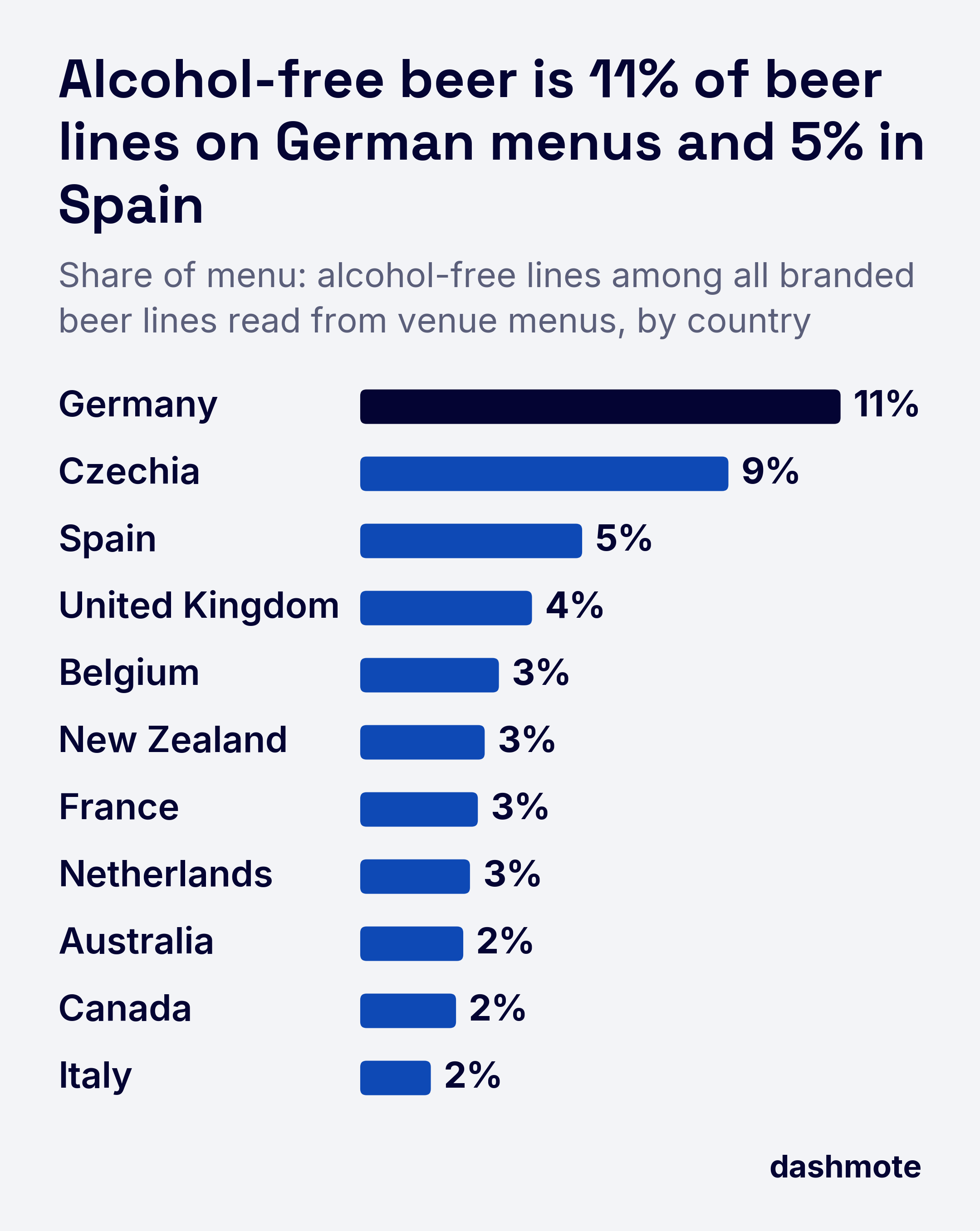
X can be a brand (one gin brand), a product type (alcohol-free beer within beer) or a style (oat milk drinks within coffee). Two choices change the number, so state them with it:
- The unit. A line is one listed item. Decide whether a gin named in three cocktails counts once or three times; most teams count every line where the brand is named, because each one is a serve the guest can order.
- Pooled or per outlet. A pooled share adds all lines together, so long menus count more. A per-outlet share computes the share on each menu and averages them, so each outlet counts equally. Say which one you used.
Share of menu and menu penetration together
Menu penetration explains the split in one paragraph: penetration counts outlets, share of menu counts lines. In practice the two are read side by side, because the combination tells a rep what kind of work is left.
| Low share of menu | High share of menu | |
|---|---|---|
| High penetration | Listed widely, but once per menu: win more serves | Strong position: defend it |
| Low penetration | Weak: start with new listings | Deep in a few outlets: copy that model to more |
Worked example
Take one city and two gin brands: your brand and a rival brand.
- The city has 300 cocktail bars with a readable menu. Across them there are 1,800 lines that name a gin.
- Your brand is named on 150 menus (penetration 150 / 300 = 50%) and in 270 lines. Share of menu = 270 / 1,800 = 15%.
- The rival brand is named on 90 menus (penetration 30%) and in 360 lines. Share of menu = 360 / 1,800 = 20%.
Your brand is in more bars, the rival owns more of each list: 360 / 90 = 4 lines per bar against your brand's 270 / 150 = 1.8. For your rep, the 150 bars that already list the brand once are the easier target: the pitch is a second serve, such as a signature cocktail, not a new listing.
Where share of menu misleads
The number is only as good as the menus underneath it.
- House pours: a menu that says "house gin" stocks a brand without naming it, so brand shares understate real stocking
- Sizes: a drink listed as a single and a double is one product; count it once or always twice, but consistently
- Menu length: a 200-line menu dominates a pooled share; check the per-outlet view before drawing conclusions
- Delivery menus: shorter and bundle-heavy, so report them apart from the menu on the table
How Dashmote data helps
Dashmote reads outlet menus, including menus in photos, outlet websites and delivery menus, so the brands and products named on each one become searchable per outlet. Reps filter for outlets where a competitor holds most of the list, or where their brand appears once, and spend their time with those owners. The same count on delivery listings sits in food delivery insights. See on-premise brand tracking and restaurant menu data.
Frequently asked questions
Is share of menu the same as menu penetration?
No. Menu penetration is the share of outlets that list something at least once; share of menu is the share of all category lines that belong to it. A brand can be on many menus and still be a small part of each.
How do you calculate share of menu?
Count the menu lines in the category that name your brand, divide by all category lines across the same menus, and multiply by 100. State whether you pooled the lines or averaged per outlet.
What is a good share of menu?
A good share of menu is at or above your share of the category's sales in the same outlets. A lower share of menu means guests see you less often than they buy you, which is a menu activation target.
Do drinks inside cocktails count toward share of menu?
They can, and for spirits they usually should, because a cocktail that names the brand is a serve. Decide the rule once and apply it to every brand.
Is share of menu the same as digital shelf share?
It is the same arithmetic on different evidence. Digital shelf share counts listings on delivery and quick commerce apps; share of menu usually means the outlet's own menu.