Are vegetarian and vegan restaurants holding back on delivery platforms?
Archived analysis. Data from 2023 and 2024.
Archived analysis of vegan and vegetarian restaurants on food delivery platforms in six countries in 2023 and 2024: the UK led, Germany grew fastest, and the share of these restaurants fell.
The popularity of vegan and vegetarian cuisine had been increasing steadily for years. People were consuming less meat and fewer other animal products such as eggs and dairy. Many reduced their consumption for animal welfare or environmental reasons, while others did so for health benefits. As a result, more people were opting for plant-based options.
This trend was expected to continue. In the 1980s, vegetarianism and veganism were considered extreme, and there were very few plant-based options available. By the time of this analysis, the variety of plant-based products had expanded dramatically. According to reports by PETA, by 2050 a large share of the animal meat market was expected to be vegan, that is, plant-based.
Vegan and vegetarian food delivery trends
We analyzed DoorDash, Uber Eats, Just Eat, Wolt, Takeaway, Foodora and Deliveroo over a period of one year in six veg-friendly countries (Australia, Germany, Spain, Italy, Sweden and the United Kingdom) to see how this trend was reflected on food delivery platforms.
UK leads in vegan and vegetarian digital storefronts
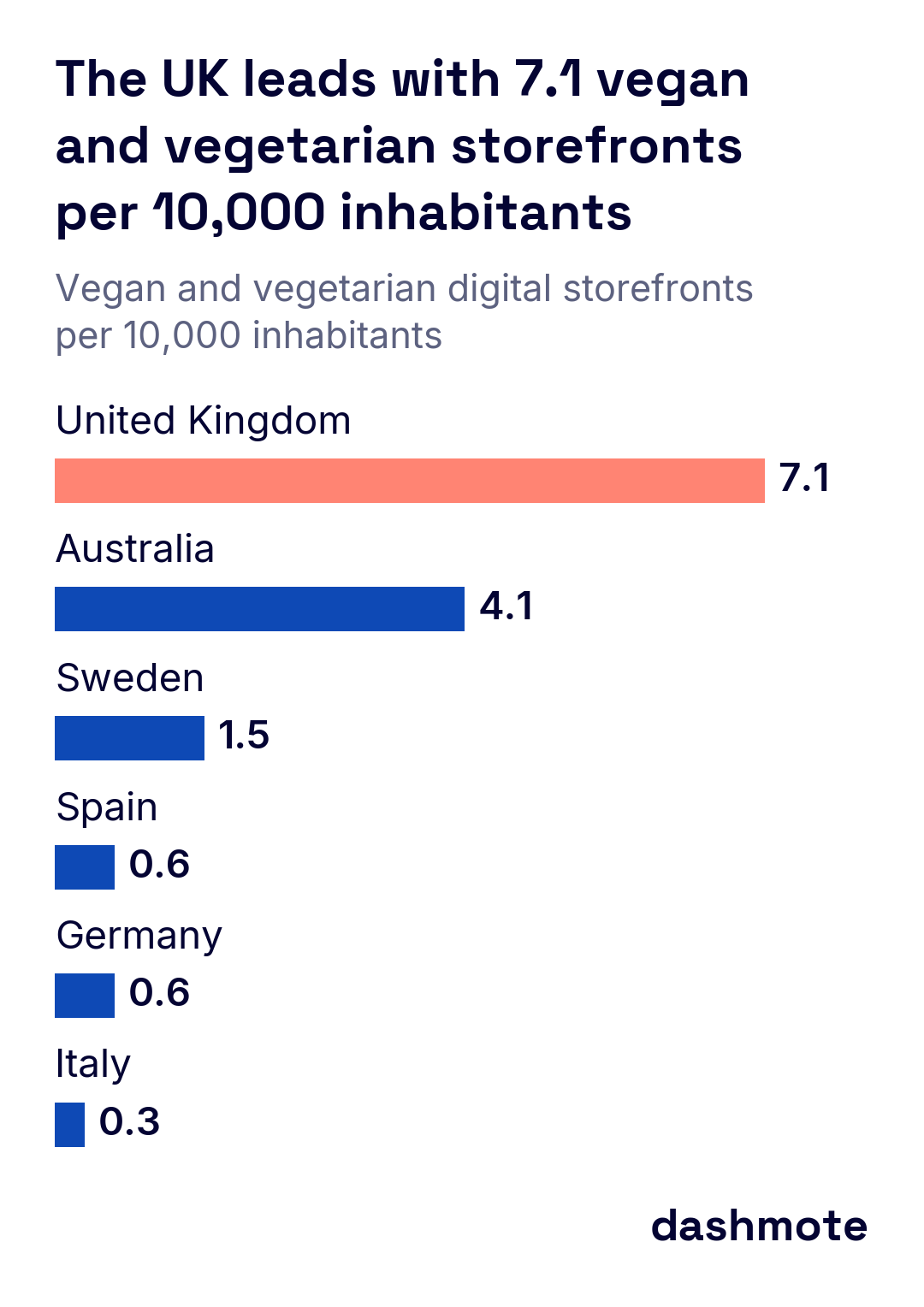
When looking at the number of vegan and vegetarian digital storefronts in these six countries, the UK stood out. It took the lead with 48,000+ vegan or vegetarian storefronts on digital platforms. This dominance was also reflected in the number of vegan or vegetarian digital storefronts per 10,000 inhabitants in the UK, which was 7.1. Australia followed with 4.1, and Sweden with 1.5 digital storefronts per 10,000 people. Germany and Spain trailed with 0.6 vegan or vegetarian restaurants per 10,000 inhabitants each.
Growth trends in Germany's vegan and vegetarian market
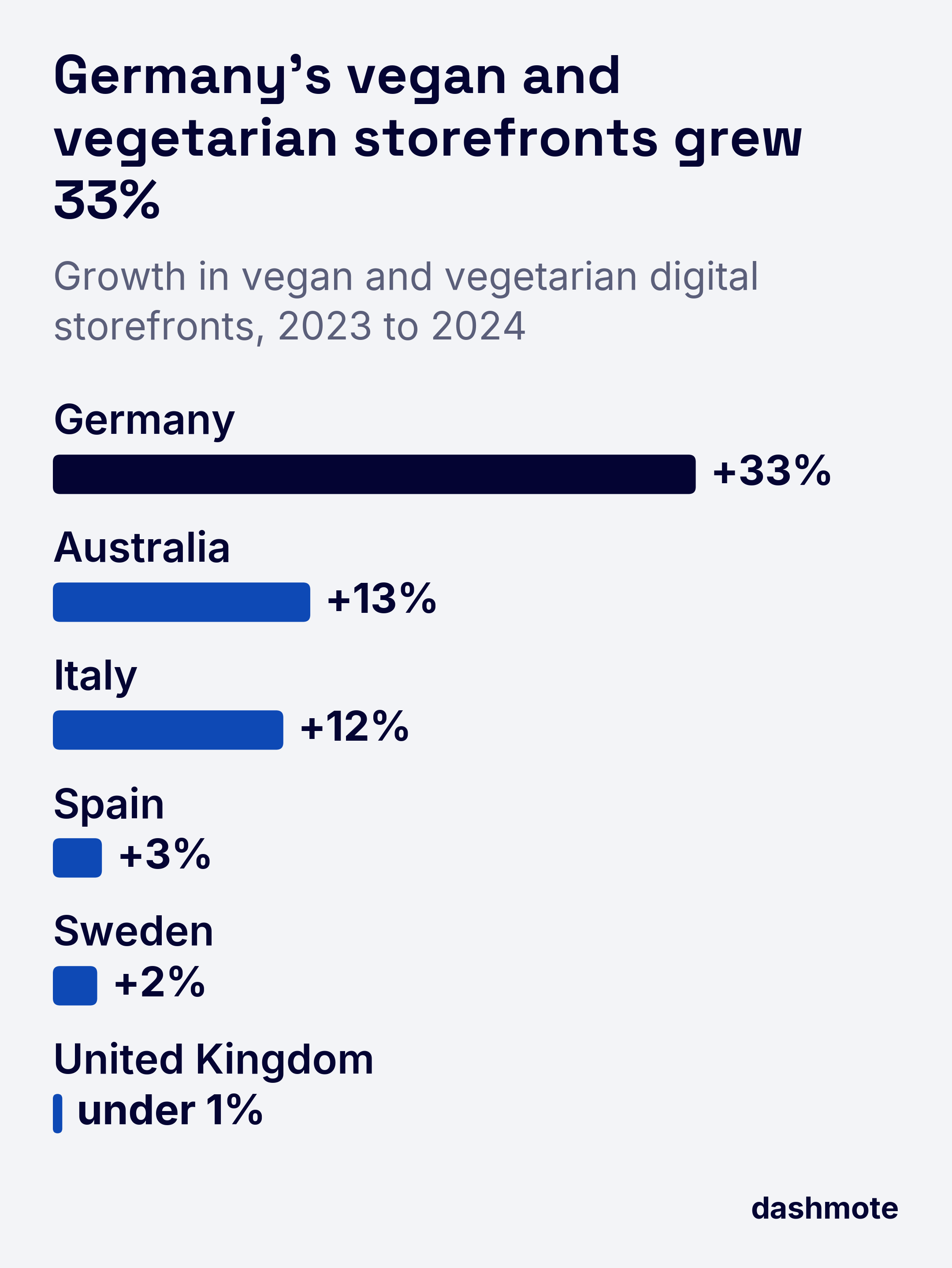
Even though the UK had the most vegan and vegetarian options, Germany saw the largest increase in the number of vegan and vegetarian digital storefronts over the year. In Germany, the number of digital storefronts grew by 33% from 2023 to 2024. Australia followed with a 13% increase, and Italy was close behind with a 12% rise. In contrast, the UK showed a small growth of under 1%.
Market share of vegan and vegetarian restaurants
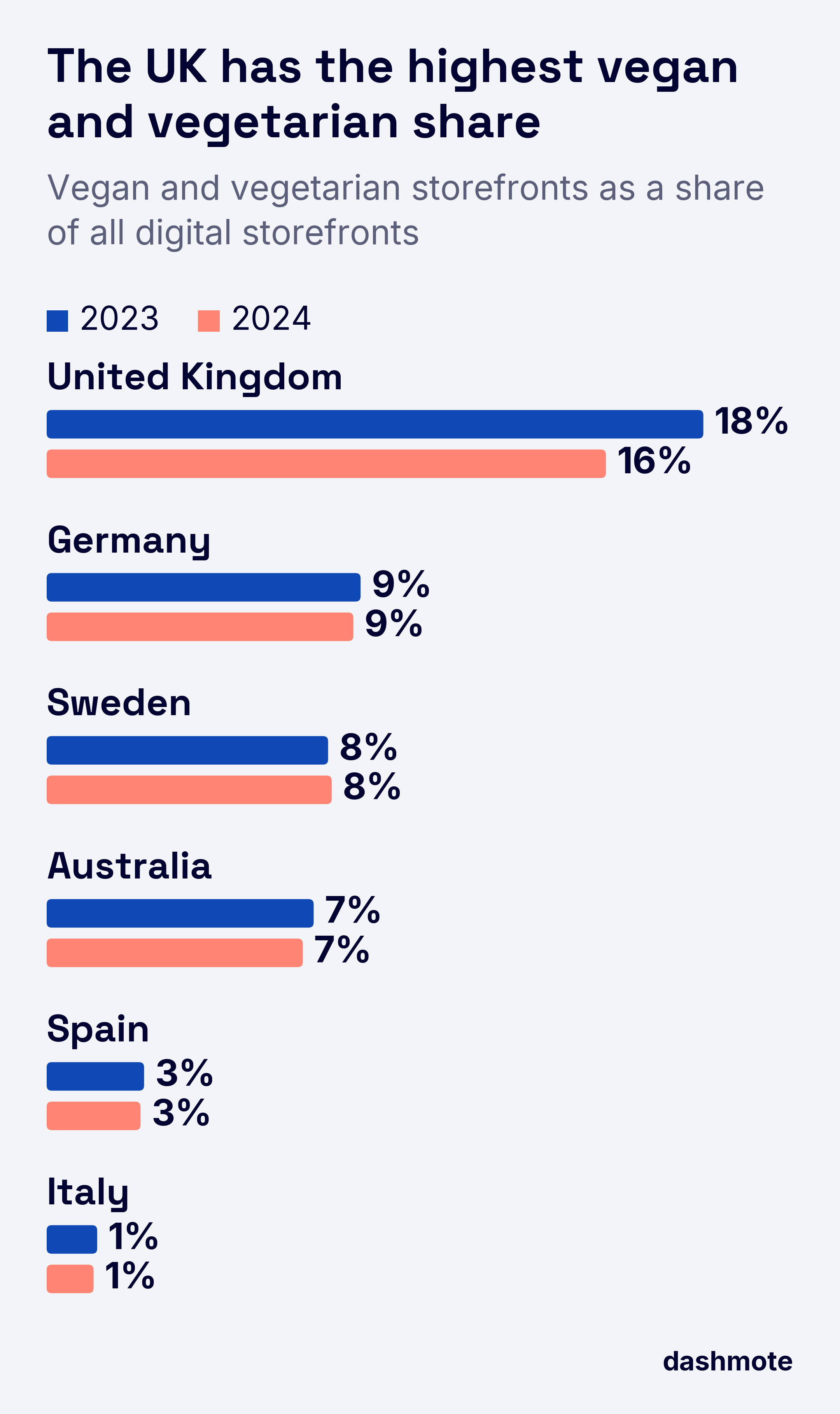
When we looked at the proportion of vegan and vegetarian restaurants compared to the total number of digital storefronts, the UK still led the pack. But its share dropped from 18% in 2023 to 16% in 2024. The only country where this share went up slightly was Sweden.
The total number of digital storefronts on food delivery platforms was increasing faster than the number of vegan and vegetarian restaurants.
3 reasons for the absence of vegan and vegetarian restaurants on delivery apps
Despite the growing interest in vegan and vegetarian diets, there were a few reasons why we did not see more of these restaurants on food delivery apps:
Market demand and size. Despite its increasing popularity, the vegan and vegetarian market was still relatively small compared to the overall food market. In many places, there simply was not enough demand for vegan and vegetarian options to support a large number of restaurants dedicated solely to these diets. Many people still preferred traditional diets with meat and animal products, which meant a bigger customer base for regular restaurants.
Restaurant conversion and menu limitations. Many restaurants on digital storefronts offered vegan and vegetarian dishes as part of their menu expansion. However, they often did not convert to fully vegan or vegetarian menus and were therefore not classified as entirely vegan or vegetarian. This led to an underrepresentation of fully vegan or vegetarian restaurants on food delivery apps, and those restaurants were not counted in this research.
Economic and visibility challenges. It could be less attractive for vegan and vegetarian restaurants to be listed on food delivery platforms. They often had to pay more for specialty ingredients, which can be pricier than regular ones. Smaller vegan and vegetarian restaurants might also not have much money to spend on advertising, making it harder for them to get noticed on these apps and attract customers.
Conclusion
While vegan and vegetarian cuisine gained popularity, its presence on food delivery platforms faced challenges. Even though the UK had the most listings, the proportion of vegan and vegetarian options went down. In Germany, although there were more listings, the share of vegan and vegetarian restaurants did not change much. The only country where we noticed a small increase in share was Sweden. The small size of the niche market and financial constraints could be holding back wider representation.
We also have to take into account that only restaurants that were fully vegetarian or vegan were counted, and that restaurants offering a wider range than vegan or vegetarian dishes were excluded from this research. The number of vegan or vegetarian restaurants was not growing, but the overall number of vegan food options possibly was.
Explore delivery menus
See how Dashmote tracks restaurant menus and dietary options to compare your products across delivery markets.